Aumanufacturing


Manufacturing news briefs — stories you might have missed
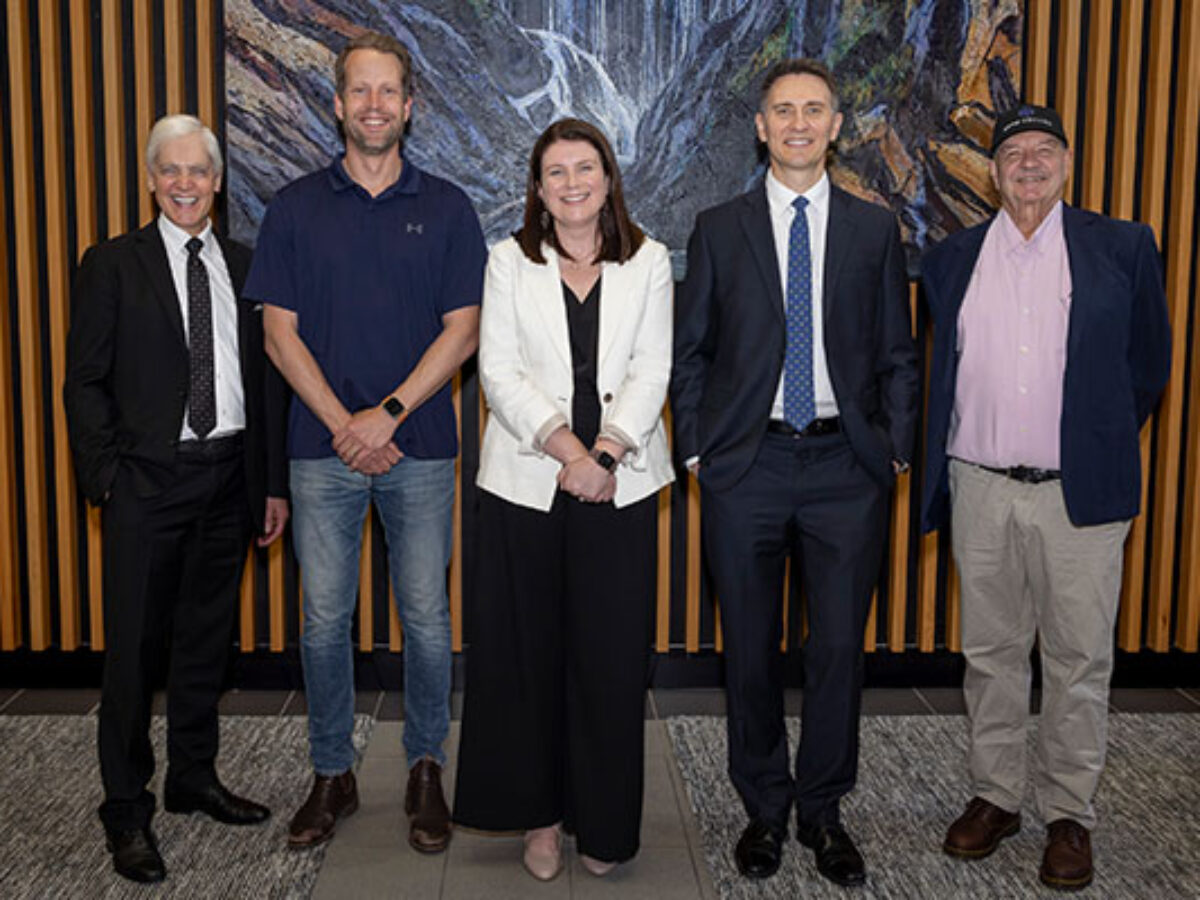
Mac Uni launches semiconductor initiative
Macquarie University launched a new on-campus Silicon Platforms Lab (SiP Lab) in collaboration with Atto Devices this week, which will be co-located on campus “to serve as the primary commercialisation pathway for the lab’s research” and “deliver an important boost to the industry in Australia.” Atto Devices is a designer of advanced hardware platforms and custom silicon chips/chiplets with applications in compute, communications and sensing, and was founded by industry veterans Neil Weste, Jeremy Hallett and Mike Boers. The SiP Lab will focus on advanced silicon system-on-chip (SoC) and system-in-package (SiP) technologies, according to the university, and work to integrate quantum sensors, photonics, bioinformatics, biosensors and other emerging fields onto leading edge silicon platforms. The initiative brings together three industry experts: Industry Professor Boers, who will establish the lab, as well as Adjunct Professor Weste and Honorary Professor David Skellern, who will serve as mentors and advisors to the lab.
Spectur cuts costs, sees CEO role change
Internet of things security solutions provider Spectur has implemented cost reduction activities totalling $1.15 million to $1.3 million per annum when fully implemented. At the same time Managing Director Dr Gerard Dyson has resigned and GM Operations and Process Anthony Schmidt will become acting CEO following the completion of Dyson’s notice period. Dyson will be moving into a Non-Executive Director role on the board of Spectur. With some delays in project awards, margin shortfalls in Q1 and exit costs, the board has conservatively updated the revenue guidance range from $8.8 million to $10.0 million and EBITDA guidance range from $670,000 to $85,000. According to Spectur: “The run-rate EBITDA, post the conclusion of cost reduction activities, is positive. Exceptional sales in October ($702k) underpin confidence in business performance for the balance of 2024.”
Provaris raises $1.5m for hydrogen, CO2
Green Hydrogen developer Provaris Energy has received firm commitments to raise $1.5 million via a share placement. The proceeds of the placement will provide funds to support priority business development activities in Europe related to both hydrogen and CO2, and preparation activities for the future restart of Provaris’ prototype tank manufacture programme. Provaris Managing Director and CEO Martin Carolan said: “Provaris continues to advance the commercial and technical steps required for compressed hydrogen to be recognised as an enabler for regional production, storage and transport of bulk-scale hydrogen into North West Europe, addressing the industry challenges of cost, complexity and efficiency. The recognition of our unique and proprietary solutions for storage and marine transport of gases is also creating early stage commercial pathways in the established CO2 shipping sector where the introduction of higher-volume CO2 tanks and ships can reduce the storage and shipping costs.”
Noxopharm raises cash from investors
Pharmaceutical developer Noxopharm has issued an additional $500,000 convertible note to an existing long-term shareholder of the company. The issue of the note provides ongoing funding for the company and helps it to explore all capital management and other potential opportunities without time pressures, according to a statement. Sharing the same terms and conditions as other recently announced convertible notes, the note will be funded in January 2025 and is secured over the 2024/25 Australian Tax Office R&D tax incentive rebate, attracting an interest rate of 12 per cent.
Government launches second review of Dairy Code of Conduct
The federal government has launched the second review of the Dairy Code of Conduct, with stakeholders across the dairy industry invited to provide feedback. According to a statement from agriculture minister Julie Collins on Thursday, review will identify whether updates are needed, and ensure the code remains fit-for-purpose. The first stage of the review will consider how dairy prices are set for processor purchasing to make sure they reflect current market values. In the second stage, the review will look at other parts of the code, focusing on market transparency and the terms of long-term Milk Supply Agreements. In 2023-24, the value of Australian milk production was estimated at $6 billion, with Australia exporting an estimated $1.1 billion of cheese. The value of Australian dairy product exports for the same period is estimated to reach $3.4 billion.
Australia-UAE CEPA trade deal signed
The Australia-United Arab Emirates Comprehensive Economic Partnership Agreement (CEPA) has been signed, and will underpin greater economic opportunities for Australian exporters, according to the the Business Council of Australia. BCA CEO Bran Black said the trade deal would be critical in growing two-way trade with one of the fastest growing regions in the world. “The UAE is Australia’s largest trading and investment partner in the Middle East, with two-way trade at the end of 2023 sitting at $9.9 billion,” said Black on Wednesday. “That figure will be supercharged under the CEPA, particularly for agricultural products and commodities linked to our global effort to decarbonise.” The CEPA will wipe away 99 per cent of tariffs on Australian exports to the UAE
Livium to sell Bynoe Lithium Project
Livium announced the sale of its remaining 30 per cent interest in the Bynoe Lithium Project to Charger Metals on Thurday for cash consideration of $500,000. Livium had agreed to sell its 30 per cent interest in Bynoe to Core Lithium in September, subject to Charger Metals’ pre-emptive rights over the interest. Charger Metals has now exercised these rights, prior to the expiry of the pre-emption period, resulting in Charger Metals agreeing to acquire the remaining interest in Bynoe Lithium Project. The transaction is expected to be completed within the next week, according to Livium. Livium CEO and Managing Director, Simon Linge, said “This transaction enables us to drive key battery recycling initiatives and enhances our balance sheet flexibility for future growth.”
Archer validates miniaturised Biochip gFET design
Fabless semiconductor company Archer Materials said on Thursday that is has designed and fabricated a miniaturised version of its biochip graphene field effect transistor (“gFET”) at its commercial foundry partner in the Netherlands, Applied Nanolayers. According to the statement, the chip design was significantly reduced in size from 10 millimetres by 10mm to 1.5 millimetres x 1.5 millimetres, or by 97 per cent. The chip was fabricated on a whole four-inch wafer with 1,375 gFET chips, compared to the 45 gFET chips produced using earlier designs in previous four-inch wafer fabrication runs, reducing the fabrication cost per chip and aiming at improving foundry readiness. The wafer has been diced and assembled at Archer’s outsourced semiconductor assembly and testing partner, AOI Electronics in Japan. Assembled chips are currently undergoing testing at Archer.
Picture: Professor Sakkie Pretorius, Deputy Vice-Chancellor, Research; Industry Professor Mike Boers, co-founder and Chief Technology Officer of Atto Devices; Professor Lucy Marshall, Executive Dean of the Faculty of Science and Engineering; Professor Dan Johnson, Pro Vice-Chancellor, Research, Innovation and Enterprise; and Adjunct Professor Neil Weste, Atto Devices co-founder. (Credit Macquarie University)


🌍 World
Worldwide Players
Except Australian players

📰 News
Latest Updates
Loading latest news…
More in this section




@aumanufacturing Sections
Analysis and Commentary Awards Casino reviews Defence Gambling Manufacturing News No deposit Bonus codes Online Casino Podcast Technology Videos