
Aumanufacturing


Manufacturing must be a clear focus of the August economic roundtable
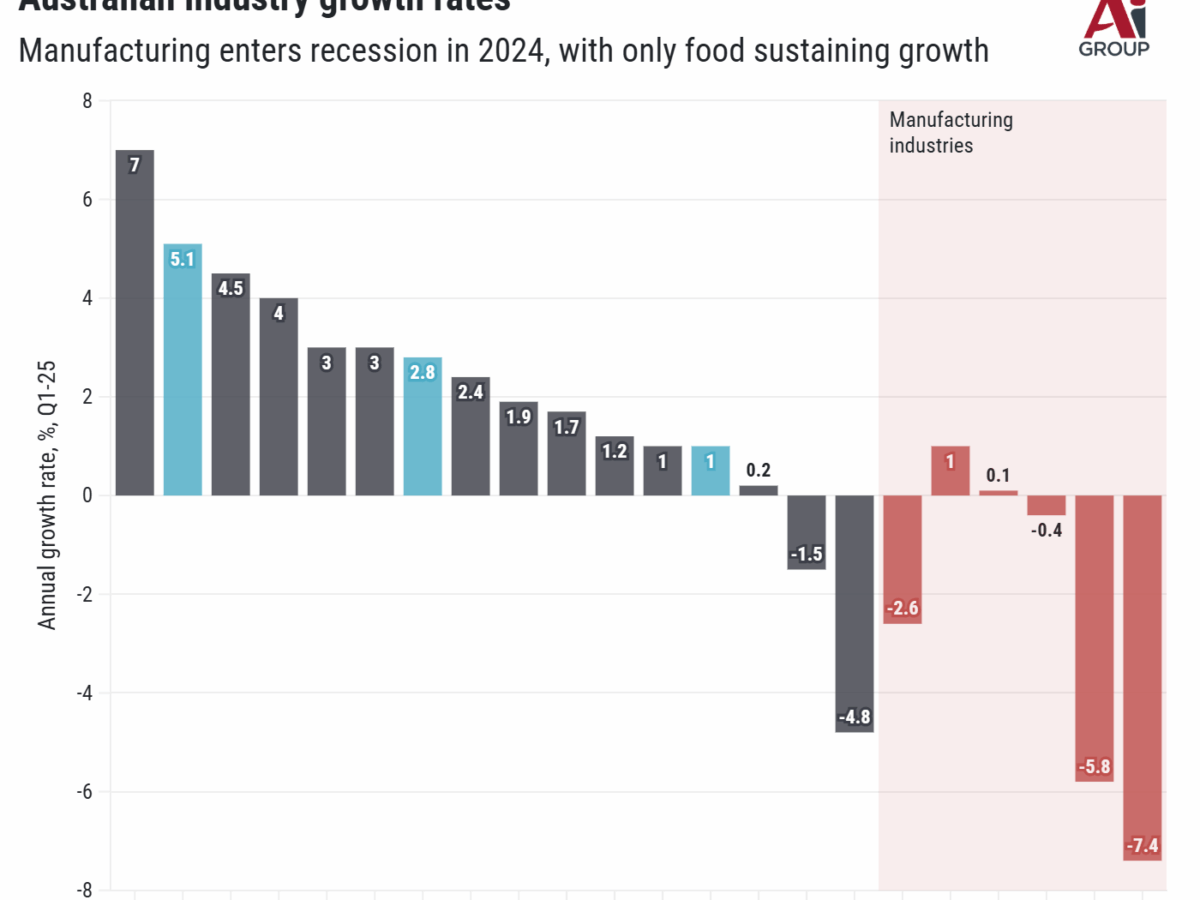
Australian manufacturing and its almost one million employees face deepening risks unless urgent economy-wide reforms are undertaken to return the industry to growth and boost its falling productivity, according to the Australian Industry Group.
Chief executive Innes Willox said Australian manufacturing as a sector slipped into recession last year and was one of the weakest performing industries in Australia today.
New Ai Group research identified four challenges weighing on the industry: soaring energy and input costs, skills shortages, trade risks and productivity.
“We should be worried. Manufacturing directly employs 930,000 people, generating over 12 per cent of our exports and 8 per cent of capex investment despite being only 5 per cent of GDP,” Willox said.
“It is also an engine of innovation, reinvesting 4.1 per cent of value-added back into R&D – the highest rate of any industry in Australia.”
Willox said cost pressures on the sector were excessive, with manufacturer input prices rising 37 per cent in the five years since the pandemic, compared to only 22 per cent for CPI. Manufacturers were paying 48 per cent more for gas than in 2019.
Skills shortages were also impacting the industry, with 61 per cent of trades and technician roles currently difficult to fill. This was especially problematic for manufacturing, where trades comprised 28 per cent of the workforce compared to a national average of 12 per cent.
Willox said the sector also faced declining productivity, with labour productivity declining by 3.7 per cent over the past decade.
“Treasurer Jim Chalmers' Roundtable next month can begin a clear reform path around the issues of energy, workforce, productivity and international competitiveness,” Willox said.
Picture: supplied

🌍 World
Worldwide Players
Except Australian players

📰 News
Latest Updates
Loading latest news…
More in this section




@aumanufacturing Sections
Analysis and Commentary Awards Casino reviews Defence Gambling Manufacturing News No deposit Bonus codes Online Casino Podcast Technology Videos