
Aumanufacturing

Waste Expo 2025: Driving the circular economy forward
Sponsored
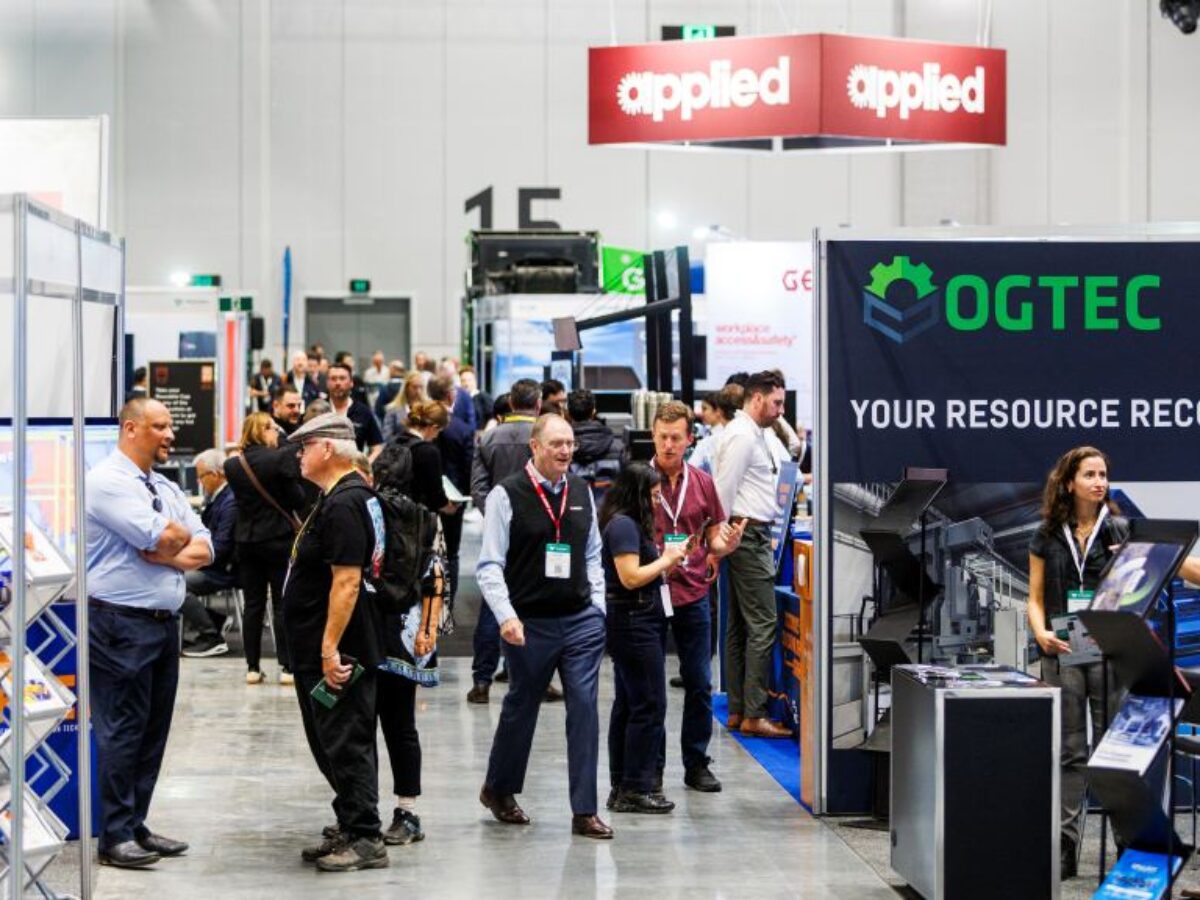
This year's Waste Expo Australia saw over 4,000 attendees through the doors over two days at the Melbourne Convention and Exhibition Centre, with an overwhelming emphasis on circularity and sustainable resource recovery dominating discussions across both the exhibition and conference programs.
Over 150 exhibitors showcased industry-leading waste management and resource recovery solutions, with exceptional professional development opportunities and thought leadership on offer from over 110 speakers across 45 conference sessions spanning the Waste Expo Summit and the co-located ecologiQ Greener Infrastructure Conference.
Right from the start of the standing-room-only Government and Policy stream, conversations were focused on the urgency and necessity of a circular economy in Victoria and the wider Australian economy. Tony Circelli, CEO of Recycling Victoria, opened discussions with statistics highlighting progress in circular economy initiatives, like a material recovery rate of 70% for the state, along with a doubling of the number of containers seen through the Container Deposit Scheme in its second year.
Following the opening panel discussions on circular economy challenges and opportunities, Matt Genever, CEO of Sustainability Victoria, reinforced the importance of community engagement and cross-sector collaboration in driving the transition to a circular economy.
“Social license is so important. We need the community to understand why we're trying to do the things that we do. And an event like this becomes that melting pot where we've got industry, government. We've got a government lounge right here where industry can come and talk directly to government colleagues. We've got community here, and that's what we need, those conversations happening between individuals, businesses, and government. Waste Expo provides an amazing platform every year for us to be able to do that.”
The Circular Economy stream of the Waste Expo Summit highlighted the critical need for mandatory Extended Producer Responsibility (EPR) regulations and national standards to create a level playing field for recyclers and brand owners. Key challenges included ensuring material purity and traceability, addressing safety risks in e-waste handling, and building systems-thinking approaches across entire supply chains with proper education and infrastructure investment.
Lisa McLean, CEO of Circular Australia, chaired the Circular Economy stream on day 1, and noted a unified message of the need for regulation as fundamental to enabling the circular economy in Australia – from plastics to e-waste and solar panels.
“Mandatory extended producer responsibility laws and regulations were a really big theme at Waste Expo Australia, with strong support across these sectors for that regulatory and policy piece. It's essential to creating a level playing field for the entire industry, from government to private enterprise and recyclers.”
EPR regulations also came up in a Day 2 panel discussion on landfill alternatives, emphasising systemic collaboration across the entire value chain, from mandatory EPR schemes and transparent labelling to community education and accessible collection infrastructure with viable end markets. Successfully diverting waste from landfill depends on financial incentives that change behaviour, designing products for circularity from the start, and recognising that reuse and resource recovery create significant employment and social benefits beyond environmental impact.
As TOMRA Cleanaway CEO James Dorney put it, “The magic formula, in my humble opinion, is three things. First and foremost, there's mandatory EPR. Secondly, an efficient, accessible, easy to use network for collection. And thirdly, an end market. That is where the Container Deposit Scheme has delivered.”
For the first time in 2025, the ecologiQ Greener Infrastructure Conference co-located with Waste Expo Australia, bringing together the resource recovery and sustainable infrastructure sectors in a strategic partnership that bridges the gap between resource recovery, sustainable infrastructure and large-scale government projects.
ecologiQ is at the forefront of integrating recycled and reused materials into road and rail infrastructure projects across Victoria. The conference showcased how the transition to purposely greener infrastructure is accelerating, driven by decarbonisation targets and circular economy principles supported by the Victorian Government's Recycled First Policy.
Yas Grigaliunas, CXO of Videopro and former founder of Circonomy, led a keynote to start the ecologiQ conference, summarising her startup journey through the circular economy as a full-circle story of believing, building, scaling and failing. She encouraged attendees and other potential founders that events like the Greener Infrastructure conference were what moves the entire circular industry forward.
“Events like this are critical. Without them, the conversations don't happen, the connections don't happen, the collaborations don't begin. And ultimately, circularity pays the price.”
The conversations continued over Day 2 of the ecologiQ conference, as Professor Veena Sahajwalla demonstrated how Australia can transform waste into high-value manufacturing opportunities through her MICROfactories™, showcasing green ceramic tiles made from waste glass and textiles, in partnership with Liverpool City Council, and highlighting breakthrough technologies in green steel and 3D printing filaments made from 100% recycled plastics.
Discussing Australia's potential to lead in circular economy manufacturing through innovative remanufacturing processes and decentralised micro factories, Professor Sahajwalla said, “It's not about what we don't do, it's about what we do, and the possibilities of where materials can actually be put back into production.”
In the Waste Summit Government and Policy stream, an insightful Indigenous Waste Management panel explored the logistical and environmental challenges faced in remote Aboriginal communities, examining how circularity connects to Indigenous concepts of “healthy country, healthy people,” and discussing how product stewardship, employment pathways, and Indigenous-owned supply chains can create sustainable waste management solutions that respect both cultural knowledge and community needs.
The exhibition floor was packed across both days, with over 150 exhibitors showcasing cutting-edge waste management solutions, recycling technologies, and sustainable infrastructure innovations. From large equipment manufacturers to innovative green tech, exhibitors made valuable industry contacts while contributing to the professional development of attendees.
Sircel is an Australian green technology company that manages processing of e-waste and solar panels to maximise the extraction of materials for remanufacturing – and they say that opportunities like Waste Expo Australia are key to demonstrating the potential for e-waste, or as Brent Murray, National Head of Sales for Sircel calls it, an e-resource.
“As our consumer behaviour has changed, so has the things that we're discarding. The management of E-waste is an ever-growing problem, as is solar panels. We've got 3.5 million solar panels coming off roofs every year so far, and that problem is only going to increase. Our job is to help people understand and manage these problems really, really well.”
Exhibition Manager Sherri Pearson says that Waste Expo Australia has continued to grow thanks to its relevance, strategic industry partnerships, and ongoing adaptation to industry trends.
“The success of Waste Expo Australia is driven by its ability to bring together the most influential players in the sector, and future editions will focus on expanding international reach and providing even more value to attendees and exhibitors. Next year's event will see exciting enhancements focused on the latest technologies and solutions being developed globally. As part of an international portfolio of events, Waste Expo Australia will continue to be the industry's must-attend event.”
Waste Expo Australia will return to the Melbourne Convention and Exhibition Centre on 28-29 October 2026. Stay up to date at www.wasteexpoaustralia.com.au.

🌍 World
Worldwide Players
Except Australian players

📰 News
Latest Updates
Loading latest news…
More in this section

@aumanufacturing Sections
Analysis and Commentary Awards Casino reviews Defence Gambling Manufacturing News No deposit Bonus codes Online Casino Podcast Technology Videos