
Aumanufacturing


Consumers can become their own power stations by Christmas
Consumers will soon be able to operate like their own mini power station, generating and storing electricity through rooftop panels, home batteries and the batteries in electric vehicles, and feeding power into the grid when prices are highest.
This stems from decisions spearheaded by Energy and Climate Change Minister Chris Bowen and agreed to by all state and territory energy ministers and approved by Standards Australia.
Bowen told the SYDNEY INTERNATIONAL EV SHOW 2024 that by Christmas, a Consumer Energy Roadmap approved by states and the standards body would be in place and allow vehicle to grid charging in Australia.
Bowen said: “Very important in the roadmap is the role of electric vehicles and hybrid vehicles.
“I'm very pleased to announce today that one of the important milestones in that…(interrupted by applause)…Thank you. Thank you to the people applauding.
“Now what that means, for those of you who are applauding and probably already know what it means, but what that means is that no longer will charging be a one-way street.
“That you can charge when you want to charge and you can discharge back to your house or to the grid when that suits you.”
Bowen said consumers could monitor electricity prices and set up feed in times in such a way that it is ‘really putting consumers in charge'.
“And the process from now is that those manufacturers that enable vehicle to grid charging and those charging companies that enable it can register their products with the Clean Energy Council and get approval for each particular product.
“They'll have to meet the standard that's been ticked off by Standards Australia, but where we've got manufacturers and OEMs who are on board for that and it all happens smoothly, we'll be able to have bi-directional charging a reality by Christmas this year.”
Bowen said the battery that sits in the driveway in the form of an EV is in almost all circumstances much more powerful than a home battery.
“And we've got to ensure that all those resources are working not just for the grid, for the country, but for the consumers, or increasingly what we call prosumers – people who are producing and consuming at the same time – producing energy and consuming energy.”
Bowen also announced a $36 million funding boost to the Driving the Nation programme, bringing available funding to boost take up of heavy electric vehicles in the logistics and delivery sectors to $100 million.
Transport accounts for one-fifth of Australia's emissions, with heavy vehicles such as trucks and buses responsible for a quarter of these transport emissions.
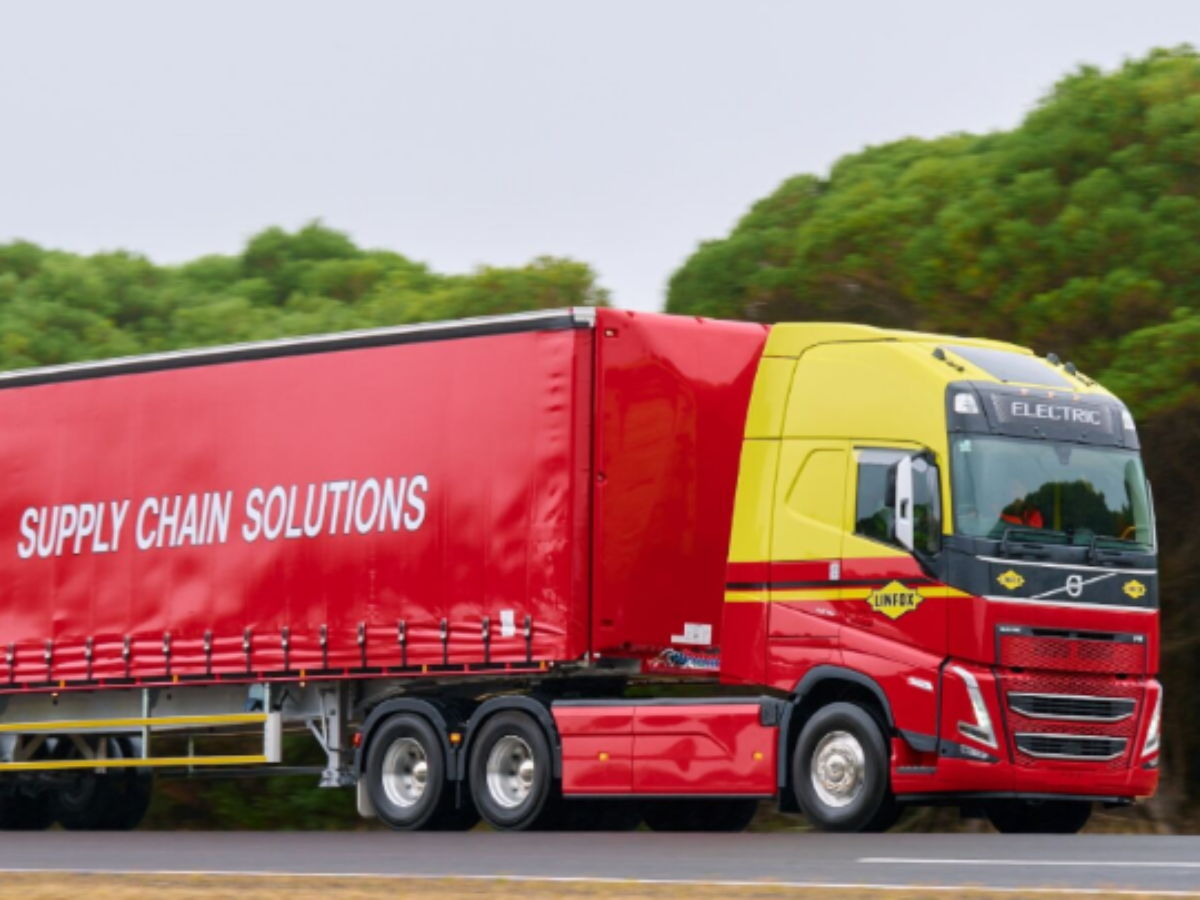
ARENA has also committed $28.6 million to support electrification projects from Australian logistics companies, Linfox and Toll.
These grants will unlock more than $124 million in private capital to reduce emissions across these national carriers, according to the government.
Linfox will use a $19.6 million grant to help roll out 26 battery-electric trucks across three of its distribution centres in Queensland, South Australia and Victoria, while Toll will use a $9 million grant to deploy 28 battery-electric trucks and construct supporting charging infrastructure at 10 sites across Australia.
Picture: Linfox/Linfox has two Volvo battery electric prime movers in its fleet

🌍 World
Worldwide Players
Except Australian players

📰 News
Latest Updates
Loading latest news…
More in this section

@aumanufacturing Sections
Analysis and Commentary Awards Casino reviews Defence Gambling Manufacturing News No deposit Bonus codes Online Casino Podcast Technology Videos