
Aumanufacturing


Manufacturing news briefs — stories you might have missed
Memphasys claims defining milestone for Felix
Reproductive technology company Memphasys has announced the successful data from a “pivotal clinical trial” for the Felix System, “confirming its best-in-class performance in sperm selection for Assisted Reproductive Technology (ART).” Conducted in partnership through Monash IVF, Memphasys said on Monday that the trial results show Felix as “non-inferior to the Swim-Up technique, but statistically superior to DGC, the most common sperm preparation technique used globally.” Memphasys said it has existing distribution agreements in Japan, Canada, and New Zealand through Vitrolife, an LOI with Heranova in China, and R&D sales in the UAE, and is now well positioned to accelerate commercial expansion. “The successful completion of the Felix System clinical trial marks a defining moment for Memphasys,” said Managing Director and CEO Dr David Ali. “Not only has the Felix System demonstrated comparable or superior performance to traditional methods, but it has also achieved the ultimate benchmark – improving embryo utilisation rates.”
Tomago concrete company handed $30,000 NSW EPA fine
Recycled Concrete Products has been fined $30,000 by the NSW Environment Protection Authority (EPA) after the company was found to have significantly exceeded its licensed waste limits. According to a statement from the NSW EPA on Monday, the company's Tomago facility — which recycles used concrete, bricks, and pavers into products such as road base — is licensed to process 30,000 tonnes of concrete waste per year. A review of the EPA's waste and resource reporting data found that by August 2024, only just five months into its reporting period, RCP “had already exceeded its annual limit by more than 4,000 tonnes. After 8 months, it had received almost double its permitted annual allowance.” RCP has been unable to accept waste since December 2024, due to an EPA Prevention Notice issued to stop the licence limit breaches, and will be able to resume operations from the end of March.
Wurrba receives NT government support for laser tech
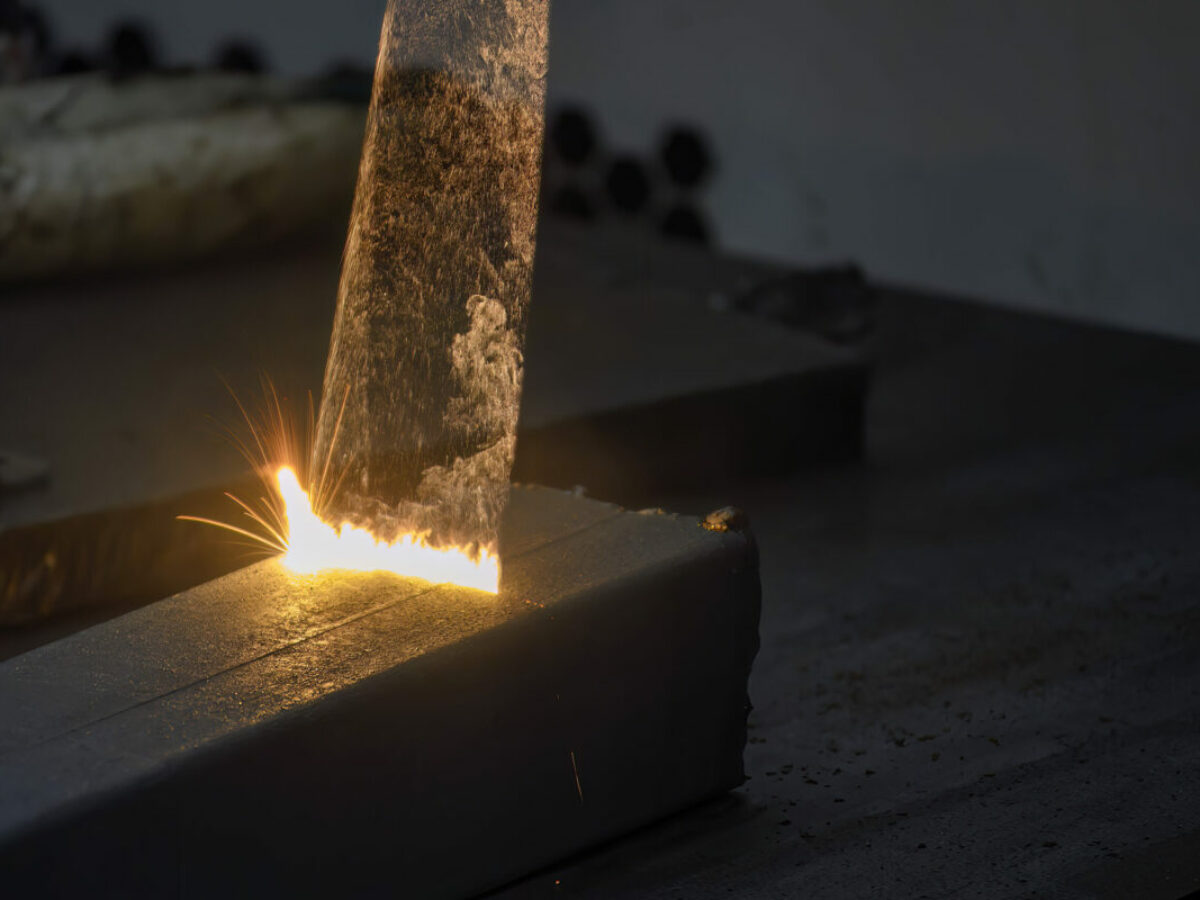
Darwin company Wurrba has received $410,733 in support from the Northern Territory Government’s Advanced Manufacturing Ecosystem Fund (AMEF.) The support is for a $1.7 million project adopting laser surface cleaning technology for metal and other materials. According to a statement on Monday from the Advanced Manufacturing Growth Centre, with administers the AMEF, this will represent “the first-time technology of this calibre will be permanently available in-region, with companies previously requiring laser cleaning services engaging with interstate, or international suppliers.” Founder Raphael Clarke said “Through the adoption and deployment of this advanced technology, Wurrba will be able to tackle everything from infrastructure remediation to equipment maintenance, remanufacturing and waste reduction faster, safer and more efficiently than ever before.” The release added that such technology is superior to traditional methods cleaning methods such as media or ice blasting” as it offers unparalleled precision, efficiency, and environmental benefits.”
Hazer achieves second funder milestone under LCG
Chemical engineering company Hazer Group has shared news that it has achieved the second key progress milestone under the Lower Carbon Grant – Gorgon Fund (LCG) Financial Assistance Agreement, enabling payment of $2.2 million (including GST). The news brings LCG funding received this quarter to $4.3 million (including GST). The non-dilutive funds “allow Hazer to achieve strong near-term liquidity and progress the commercial scale up of our unique Western Australian technology” it added. The LCG was established in 2024 by the Western Australian government to provide funding for local innovations and projects which support decarbonisation. Hazer was awarded $6.2 million (excluding GST) of grant funding through the program.
Australian water heater selected by SDG in world RV capital
Australian RV, marine, and specialist electric hot water company Aus J has achieved what it calls a “breakthrough entry into the centre of the North American RV market” with SDG to distribute the Australian company's digitally switchable 12V-to-mains Duoetto Gen 3 compact water heater. SDG is North American specialist in HVAC solutions for RVs and specialty vehicles, headquartered in Elkhart Indiana: known by some as the RV Capital of the World. According to a statement last week from Aus J, its 2.65-US gallon (10-litre) Duoetto Gen 3 – and the complementary original Duoetto 12V/240V model sold in Australia and internationally – can also be used in compact building industry applications including tiny homes and off-grid structures. According to Aus J, its product is “the world’s first 12V/120V water heater with optional remote control, providing on-demand hot water without requiring both gas and electricity”.
UQ nanotechnology could improve odds in treating aggressive breast cancers
A University of Queensland research team led by Professor Chengzhong (Michael) Yu is designing nanotechnology they believe could improve how the most aggressive form of breast cancer is treated. The researchers are developing novel nanoparticles that could dramatically increase the effectiveness of immunotherapies when treating triple-negative breast cancer (TNBC), UQ said on Monday, describing TNBC as “aggressive, fast-growing and account[ing] for 30 per cent of all breast cancer deaths in Australia each year, despite making up only 10 to 15 per cent of new cases.” Aided by a $3 million, five-year Investigator grant from the National Health and Medical Research Council (NHMRC), Yu aims to design a nanoparticle to bolster TNBC patients’ immune response to treatments.
Picture: credit AMGC

🌍 World
Worldwide Players
Except Australian players

📰 News
Latest Updates
Loading latest news…
More in this section




@aumanufacturing Sections
Analysis and Commentary Awards Casino reviews Defence Gambling Manufacturing News No deposit Bonus codes Online Casino Podcast Technology Videos