
Aumanufacturing


You won’t believe how badly this tiny Australian clock just embarrassed the entire GPS system
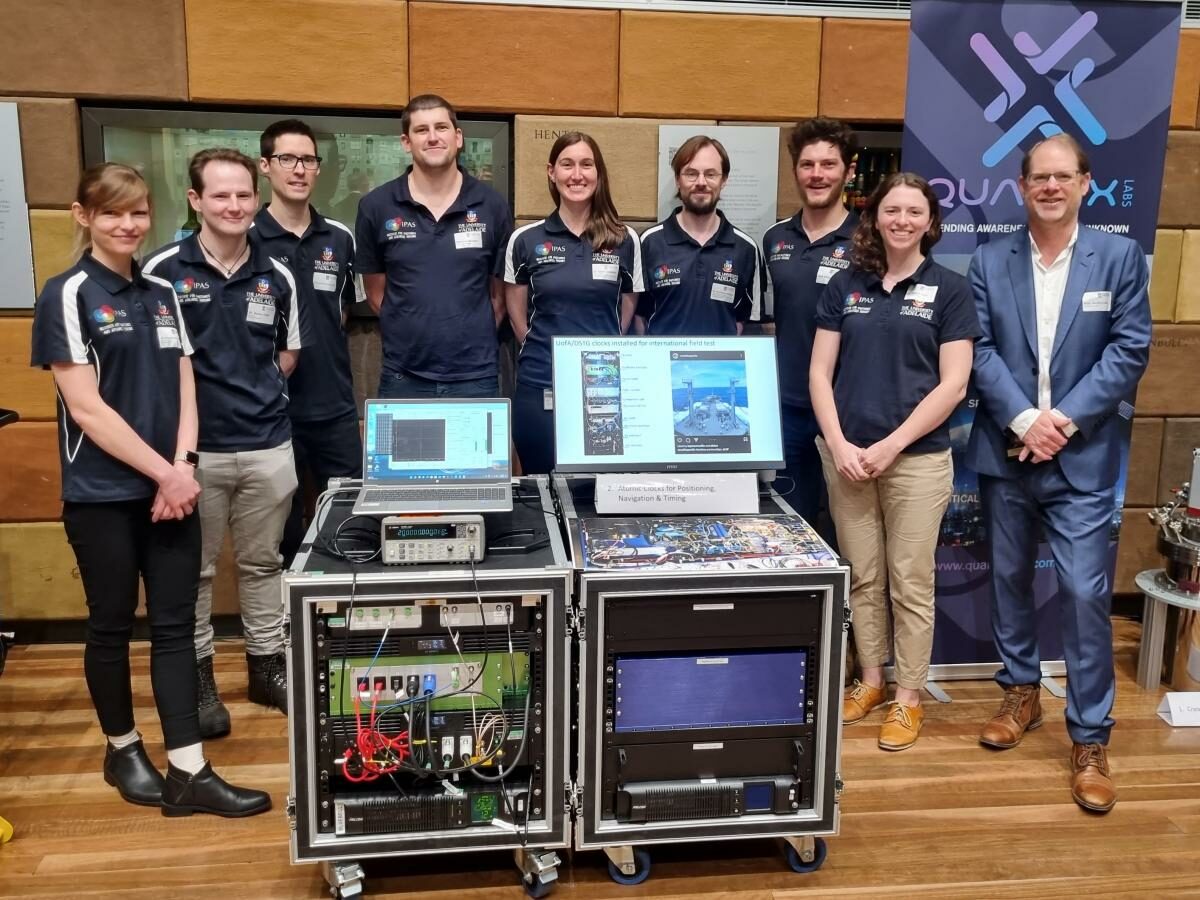
Forget everything you thought you knew about keeping time – University of Adelaide scientists have built quantum clocks so accurate they make GPS look like a sundial in a thunderstorm.
These cutting-edge optical quantum clocks have been proven to outperform GPS navigation systems by many orders of magnitude during real-world naval exercises in Hawaii, marking a breakthrough that could revolutionise how we navigate in hostile environments.
The clocks were developed by a team led by Professor Andre Luiten, chief innovator and chair of experimental physics at the Institute of Photonics and Advanced Sensing, working alongside colleagues at the Defence Science and Technology Group.
But here's the kicker – these aren't your grandfather's atomic clocks gathering dust in a sterile laboratory. These quantum timepieces were built tough enough to handle the rolling seas, designed specifically to withstand being rocked by waves while mounted on warships.
Luiten said the breakthrough addressed a critical vulnerability in modern warfare and communications.
“Timing signals are currently provided by the Global Positioning System, however in contested environments, where GPS may be jammed or spoofed, time synchronisation between locations would rapidly deteriorate,” Luiten said.
Dr Ashby Hilton, research physicist from the IPAS team, said the quantum clocks were between 20 and 200 times more precise than current international standards – a performance gap so wide it's almost unfair to compare them.
“Both clocks are optical atomic clocks, using the elements rubidium and ytterbium to provide incredibly pure timing signals which enables superior performance to GPS clocks,” Hilton said.
The ultimate test came during the Rim of the Pacific naval exercises in July 2022, where Australia's quantum clocks went head-to-head with the world's best timing technology from other nations – and came out on top.
The University has partnered with local quantum technologies company Quantx Labs to bring this game-changing technology from the lab to the real world.
Picture: credit University of Adelaide

🌍 World
Worldwide Players
Except Australian players

📰 News
Latest Updates
Loading latest news…
More in this section




@aumanufacturing Sections
Analysis and Commentary Awards Casino reviews Defence Gambling Manufacturing News No deposit Bonus codes Online Casino Podcast Technology Videos