
Aumanufacturing

The science and business of making and unmaking
Like-for-like recycling, for example turning a PET bottle into another PET bottle, is a good outcome, believes Scientia Professor Veena Sahajwalla.
The inventor and founding Director of UNSW’s Centre for Sustainable Materials Research and Technology (SMaRT) is focussed elsewhere, though.
“When materials get more complex you can’t always assume that conventional solutions and conventional manufacturing will always apply,” she tells us.
“We can’t just assume ‘well we’ve already put this particular problematic material in the too-hard material [basket] and there’s nothing that can be done about it.’ That’s not good enough.”
Following her work inventing and commercialising Polymer Injection Technology or Green Steel – which substitutes a portion of coke used in steelmaking with recycled materials – Sahajwalla has devoted her energies to microfactory (styled MICROfactorie) technologies.
The concept, based on “microrecycling science” programs at SMaRT, has moved out of labs and is being used with commercial partners on various efforts to transform “problematic waste materials” into products including aerosol cans and acoustic panels.
A year ago, Renew IT launched a MICROfactorie module at its Lane Cove site, which is turning hard plastics from e-waste into feedstock for 3D printing, a product that is routinely imported to Australia rather than made here.
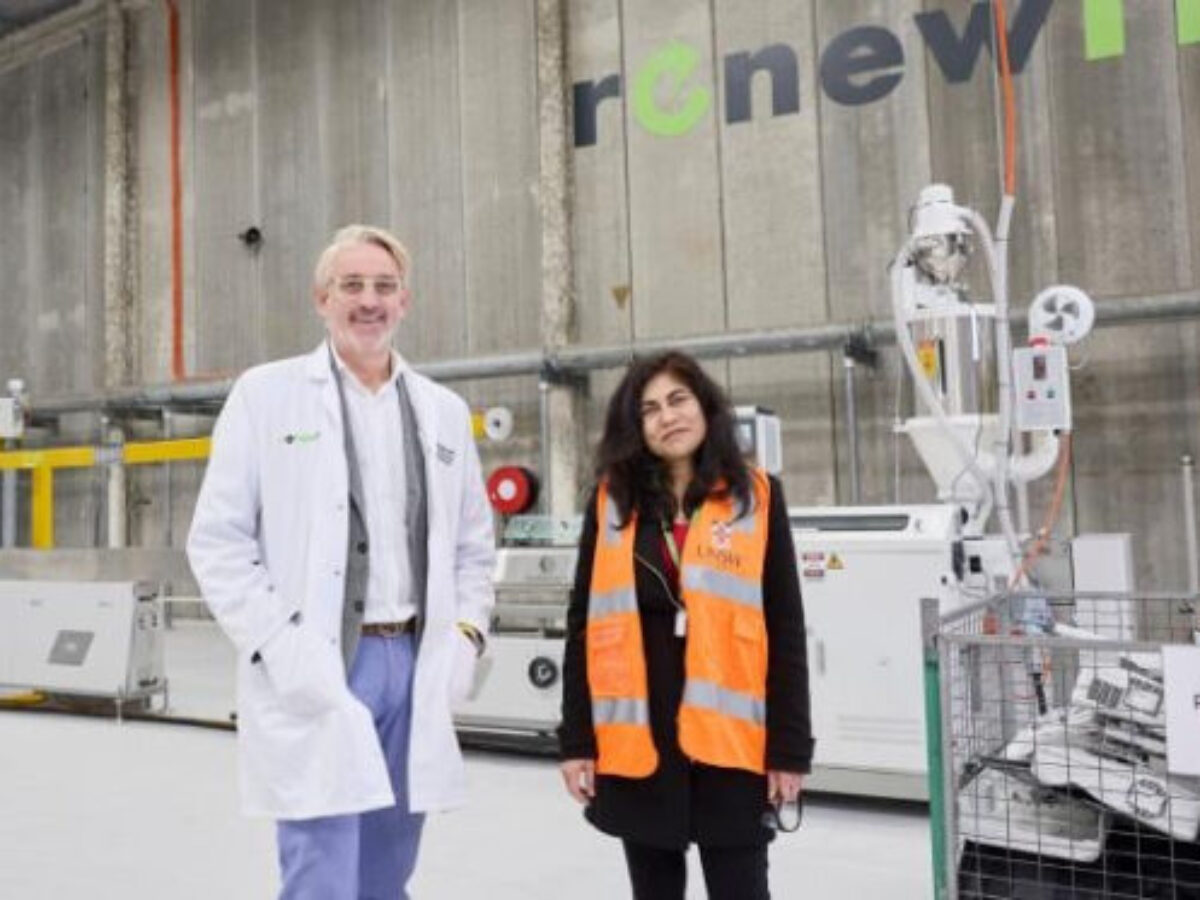
The partnership between SMaRT and the IT asset management business will feature in a conversation between Sahajwalla and CEO of Renew IT, James Lancaster (pictured), at the Industrial Transformation Australia expo next week. (You can register to attend here.)
“End of life products are literally just products waiting to be remade into something else,” Sahajwalla says of her work with manufacturers and others.
“We expect a lot from the making part of our products. To me, that’s the science of making. But what we are really challenging ourselves is to say ‘what about the science of unmaking?’
“And if it’s the science of unmaking, and then remaking, and if that cycle were to continue over and over again where different kinds of material are diverted away from landfill and they’re used for remanufacturing, then to me, really what we are saying is we really shouldn’t be calling anything [waste.]”
In this episode of @AuManufacturing Conversations, published in partnership with Hannover Messe’s Industrial Transformation Australia event, Sahajwalla talks about working at “the exciting new frontier” of recycling, where Australian companies can contribute globally, and more.
 @AuManufacturing is a media partner to Industrial Transformation Australia 2025. You can find more information about the free event – to be held July 22-24 at The Dome, Sydney Olympic Park – at this link.
Episode guide
1.18 – introduction
2:35 – Forming and progressing industry partnerships, for example recycling e-waste into 3D printing filament with Renew IT.
4:10 – Going beyond the traditional way of thinking about recycling.
5:50 – People are noticing Australian recycling technology internationally.
7:03 – What Australians do well.
8:02 – The critical thing about recycling and remanufacturing.
9:22 – “End of life products are literally just products waiting to be remade into something else.”
Picture: credit UNSW

🌍 World
Worldwide Players
Except Australian players

📰 News
Latest Updates
Loading latest news…
More in this section



@aumanufacturing Sections
Analysis and Commentary Awards Casino reviews Defence Gambling Manufacturing News No deposit Bonus codes Online Casino Podcast Technology Videos