
Aumanufacturing


Multidisciplinary UNSW team uses advanced computational methods, 3D printing to tackle housing crisis for oysters
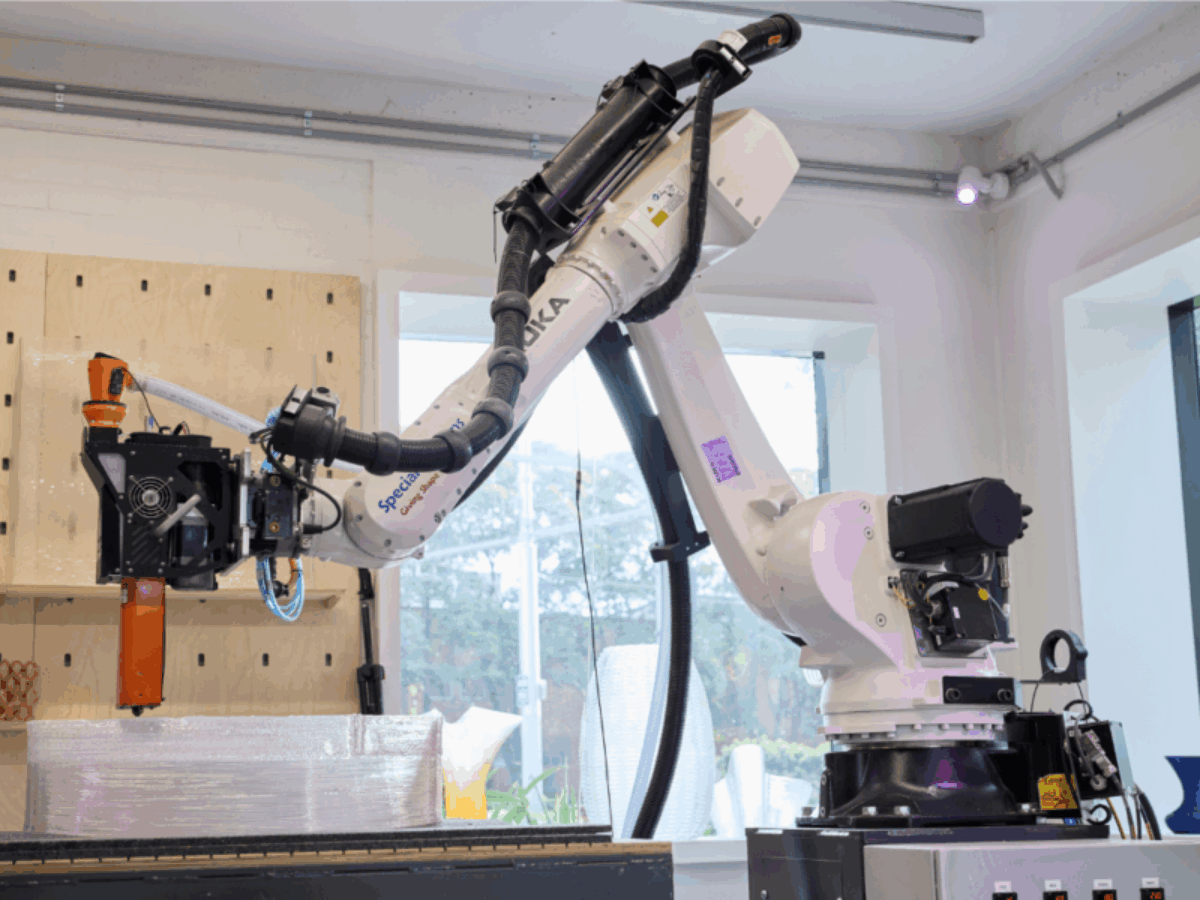
A team from UNSW has used recycled plastic, crushed oyster shells and concrete to create structures recently installed at Glebe’s Sydney Fish Market site and aimed at re-establishing oyster populations around Sydney Harbour.
According to a statement from the university on Tuesday, researchers have developed these novel “BioShelters” in a project supported by Landcom and NSW government funding and making use of “advanced computational methods architects use to design and fabricate green coastal infrastructure.”
Each structure is approximately six metres by two metres and 90 centimetres and made of “a concrete mix that includes crushed oyster shells” and “a 3D-printed recycled plastic mould”. The structures are segmented into 25 individual panels.
Oyster habitats have suffered at sites such as Sydney, with over 50 per cent of the harbour shoreline modified with built structures such as seawalls.
Seawalls protect coastal infrastructure but “are typically flat and lack the features and crevices” that can support native biodiversity. Oysters are one important part of this, the university said, with each oyster filtering as much as 100 litres of water per day.
“Just as there is a housing crisis in Sydney for humans, there is one for sea creatures like oysters,” said Professor M. Hank Haeusler, Director of the ARC Centre for Next-Gen Architectural Manufacturing at UNSW and leader of the BioShelters project.
“What this project aims to do is create new artificial habitats that are as close to nature as possible.”
The project began in 2016.
Previous work by marine biologists for the interdisciplinary effort – which also involves architecture, computational design, and engineering specialists – identified suitable for three habitat-forming species: the Sydney rock oyster, native hairy mussels and a species of native kelp.
Marine biologist Nina Schaefer explained that a combination of good water flow, light and moisture, and places for “mobile species like snails and crabs” to hide were needed.
“So the design had to accommodate water flowing through the structure, and include features that also trap water, and offer small, shaded areas for shelter,” she said.
Using this data, the design team developed digital models and miniature prototypes using 3D printing. A full-scale prototype under the Anzac Bridge was installed in 2020, and identified as a success six months later after the structure was colonised by oysters, seaweed, kelp and small fish.
The next steps of the project will focus on refining fabrication of structures, aiming to go from moulds filled with concrete to printing concrete directly to streamline production.
Picture: The 3D-printed BioShelters are created using algorithms informed by marine biology allowing for the design of site-specific habitat solutions (supplied)
Further reading
3D concrete printing could free the world from boring buildings
RMIT team pinches an idea from a lobster, uses it to make stronger 3D printed concrete

🌍 World
Worldwide Players
Except Australian players

📰 News
Latest Updates
Loading latest news…
More in this section




@aumanufacturing Sections
Analysis and Commentary Awards Casino reviews Defence Gambling Manufacturing News No deposit Bonus codes Online Casino Podcast Technology Videos