
A solution to cheaper, greener construction could be in the bag, says robotics team
“When I started this I had a perfectly good architecture practice, which has just gone so badly to seed,” recalls Dr Jan Golembiewski, CEO and co-founder of Earthbuilt Technology.
Golembiewski has put everything else on hold to focus on his startup, established 2022. The company’s goal is to enable 3D printed houses, using onsite materials and a patented way of extruding and bagging these to build up structures.
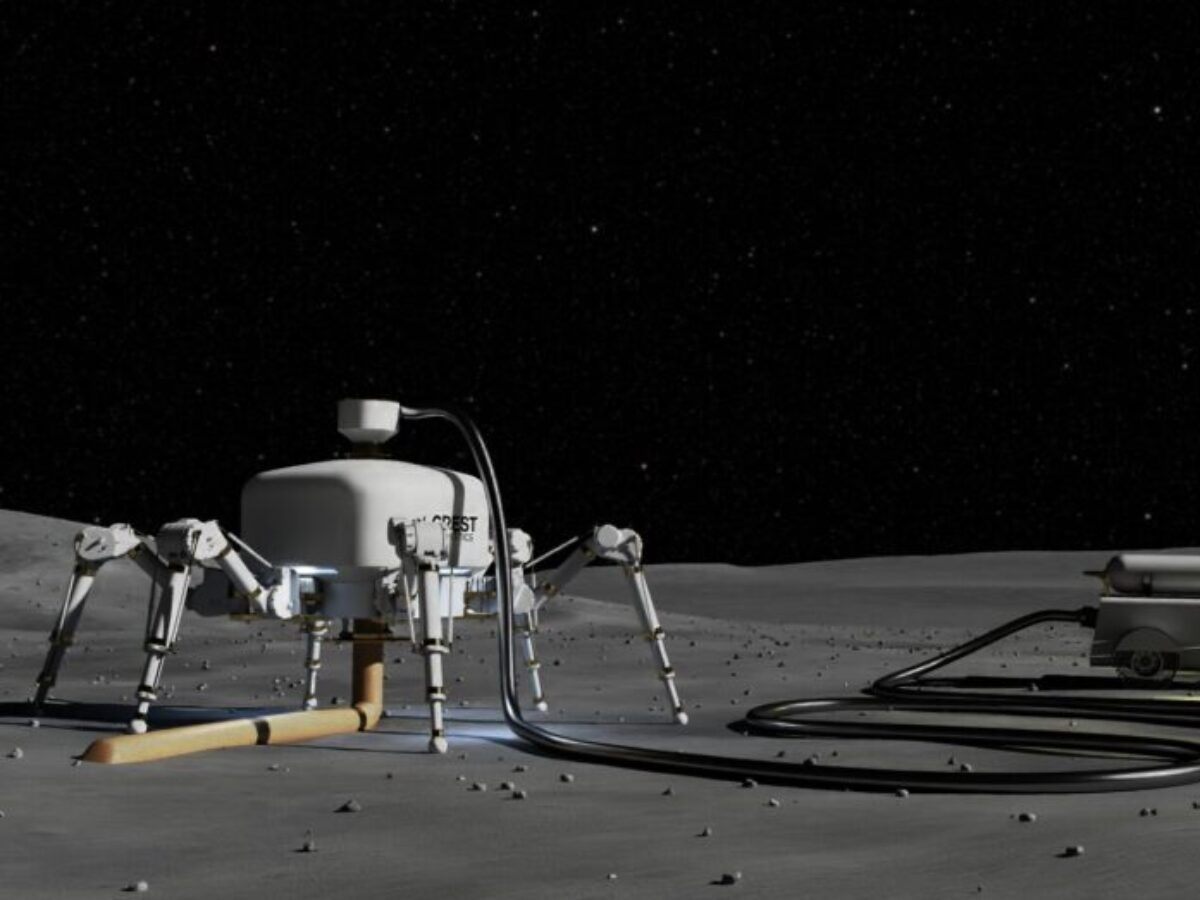
Their partnership with Crest Robotics, and a small-scale prototype of the Charlotte hexapod robot, was showcased at last month’s International Astronautical Congress (IAC) 2025 conference in Sydney.
 The robot – “agnostic” about the material it can print in – might one day be used to bag and build using regolith on the moon.
On earth, says Golembiewski, it can use feedstocks including crushed building materials, sand or recycled glass, wrap these in a continual membrane or fibrous weaving, and compress them into a solid mass, which is brick-like but continuous.
The concept is inspired by reinforced earth, invented in the 1960s in France, but applied to highway design.
“Instead of firing it, instead of gluing it, it wraps it on the outside edge. And if any structural engineers are listening there, they’ll go ‘oh that’s kind of clever.’ Because that’s the one place where tensile membranes are really useful, just to hold the material together,” he tells @AuManufacturing.
“As long as that material on the inside is held together, it will remain structural.”
His company and Crest Robotics linked up at Muswellbrook startup incubator The Melt. The Charlotte project has received backing from the state government’s NSW Space+ Program, delivered by SmartSat CRC.
According to the team, the robot will be able to build a 200 square metre home in a day, carbon emissions-free, using materials onsite.

Asked about the maturity of the solution, Golembiewski says Charlotte represents several technologies coming together, most of which are at TRL 5.
It is one of a handful of homegrown, robotics-based solutions aiming to address the construction part of the nation’s housing affordability woes. Others featured by this title over the years have included FBR and Luyten (featured on the @AuManufacturing Conversations podcast in 2023.)
Dr Clyde Webster, Founding Director of Crest Robotics, says such companies give him confidence that what his team is doing “can be done here and should be done here”.
“From my perspective, the housing crisis needs to be solved with lots of different technologies, and it’s really important that all of these companies come together with different approaches that are all suitable and usable in different ways,” he adds.
In this episode of @AuManufacturing Conversations, Golembiewski and Webster share the origins and goals of their Charlotte project, the opportunity presented by construction robotics, and more.
Episode guide
0:34 – An introduction to our guests.
2:40 – What both companies do on a day to day basis, and how Charlotte relates to that.
4:10 – Both in “hard tech” startups for a similar amount of time.
5:15 – Enhancing and supplementing blue-collar workers, “taking the danger out of the job, not the person.” For example on the moon.
6:20 – What the hexapod robot Charlotte is and what it does. A robot, extruder and “very sophisticated fill delivery system that transfers over material at… really highly productive rates.”
7:25 – Sourcing material for building.
9:40 – Why was it a hit with news coverage?
11:30 – Robotic construction is “a huge market opportunity” and they hope to work with other such companies.
13:03 – Why their approach is “fundamentally different” to other companies such as FBR and Luyten. These are companies that are also showing “that this sort of work can be done here and should be done here.”
14:15 – Some reasons why the moon is so extremely difficult to build on.
15:20 – Charlotte is several technologies coming together. They still need to be properly integrated and tested.
15:56 – Other projects Crest Robotics is involved in, including the Gorilla Mark 1 Robotic Puller and the Emu, for repetitive overhead work.
17:15 – More on the EarthBuilt printer and how it can be used.
17:55 – The valley of death.
18:30 – Manufacturers are invited to get in touch with Crest, which is seeking more local suppliers.
Further reading
Self-belief, cementitious 3D printing, and sensors
FBR to build three new Hadrian-X robots
Melbourne Polytechnic to get new Modern Methods of Construction hub in 2029
Luyten sells giant 3D printer to construction startup
Graphene oxide creates stronger 3D printed concrete, but less seems to be more
Pictures: supplied
More in this section



@aumanufacturing Sections
Analysis and Commentary Awards Casino reviews Defence Gambling Manufacturing News No deposit Bonus codes Online Casino Podcast Technology Videos