
Aumanufacturing


A Sydney company’s plan to build thousands of fast, cheap and out of this world first responder vehicles
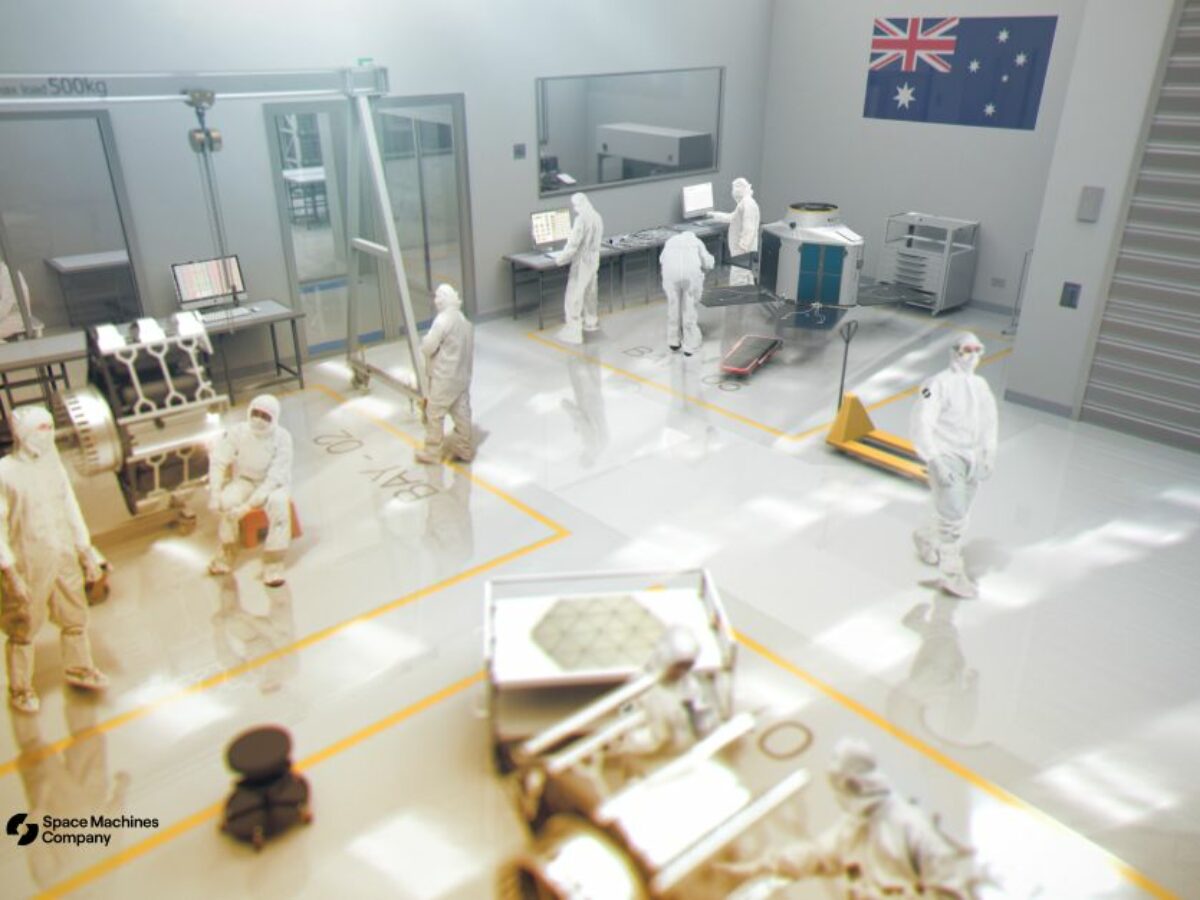
Last month Space Machines Company, which plans to one day offer “roadside assistance in space”, completed what it says is an important milestone.
The company successfully completed its 3D printed Scintilla engine, which passed a critical design review as well as more than 1,200 seconds of testing time at a private farm somewhere in Queensland.
The inhouse-designed propulsion system – powered by an ethane and nitrous oxide blend – is another bit of all-important vertical integration the company is chasing. Scintilla was made by a contractor, but that won’t always be so.
“Scintilla has now given us an almost 10X reduction in price if we were to buy from the market. And that’s exactly the type of vertical integration and local capability we want to build, where something that would’ve cost us a million dollars will cost us $20,000 a flight,” CEO and co-founder Rajat Kulshrestha tells us.
“And so being able to reach that and being able to build that capability here in Australia is super-exciting from our perspective.”
Kulshrestha and co-founder George Freney are, as is often the case with space startup founders, bold individuals.
One SMC vehicle has reached orbit, with a second scheduled to launch from India some time next year. The pair are already thinking about how to potentially build thousands of their Optimus Viper spacecraft by “early next decade”, while bringing as many local suppliers as possible along for the ride.
“What we want to be famous for and the best in the world at is fast, economic on-orbit response,” explains Freney.
“Which means we have to be the cheapest, best spacecraft to deliver that.”
They can currently have as many as five Optimuses in production at once at their Botany OF-1 facility within the UTS Tech Lab, with capacity to assemble 20 craft a year. Each unit, weighing around 200 kilograms, will be loaded with the sensors, software and propulsion kit needed to get very close to an asset, understand what’s happening on it, and sell that information to a client.
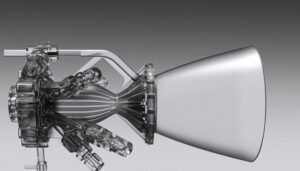
Scintilla (supplied)
There is also the possibility of selling the vehicles themselves.
SMC is simultaneously tackling the proverbial chicken and egg of delivering new technology. You build affordability into the supply chain and product, they believe, and the demand and therefore volumes will also be there.
Kulshrestha, who studied aerospace engineering before a career in tech startups, describes a counterintuitive approach that is very different from traditional aerospace and space manufacturing.
Instead of every supply chain decision being “highly-performant, very risk-averse”, the view is to consider the objective of building in the hundreds early on, as well as the reality that some will fail.
“Starlink’s done this, and Amazon Web Services has done it in the early-2000s… You look at system capability. You produce ten, and if eight of them work you still get more capability per dollar than you would get with one perfect one,” he explains.
“So I think taking this very different approach to manufacturing, and this is why we are now starting to think about OF-1, what does that mean? We’re already starting to about if you’re producing this capability at 100 a year: what needs to happen today to make that happen?
“Rather than that being an afterthought, after the next three have been in orbit. Which might be two, three years away.”
In this episode of @AuManufacturing Conversations, Kulshrestha and Freney tell us about what they learned from the maiden Optimus launch last year, why they’ve chosen to build a business around the need to manoeuvre rapidly at low cost in orbit, what Australian space manufacturers' collective superpower must be, and much more.
Episode guide
0:42 – Professional backgrounds of the two founders
3:32 – A very simple origin story.
4:20 – The problem was the need to manoeuvre in orbit.
6:01 – Moving rapidly in orbit, at low cost, and to all the assets that are depended on.
7:48 – If first responders on earth cost millions of dollars, then they wouldn’t be useful.
9:04 – The maiden launch of Optimus, what would be considered a successful result, and how it was achieved.
10:58 – “On a very tight budget, we built Australia’s largest single spacecraft and got it into orbit. And the outcome of that is belief.”
12:32 – The inputs. Supply chain in India, Europe and Australia. “We are targeting that by the end of the third mission, we should be able to get up to 70 per cent Australian content.”
14:10 – More than 50 suppliers in Australia currently.
15:42 – What an industrial sewing example shows.
17:55 – Getting to scale and what manufacturing at scale would look like.
22:20 – What their business model is based on and who their customers will likely be. National security, then civil government, then commercial is the likely order.
24:33 – The recently-unveiled Scintilla engine.
27:34 – Testing on Scintilla began late last year. Some of the tests performed so far.
29:00 – Ethane and nitrous oxide propellants. A combination “used by a lot of companies in the US” and which brings “simplicity and ease of handling” among other benefits.
30:05 – The road to the MAITRI mission.
31:10 – The spread of the company so far, including an important recent hire in Washington.
32:45 – What’s needed here to grow industrial strength is focus, and making for space is an answer to this.
Picture: supplied
Further reading
Space Machines Company finalises Australian-first 3D printed rocket engine
Space Machines Company, NewSpace India sign launch agreement at Indian Space Congress
Space Machines Company opens Australia’s largest spacecraft manufacturing facility
Space Machines Company purchases navigation system from Inovor
HEO’s Holmes space camera to fly on upcoming Australian-Indian mission
Space Machines unveils Optimus Viper for satellite repair

🌍 World
Worldwide Players
Except Australian players

📰 News
Latest Updates
Loading latest news…
More in this section


@aumanufacturing Sections
Analysis and Commentary Awards Casino reviews Defence Gambling Manufacturing News No deposit Bonus codes Online Casino Podcast Technology Videos