Manufacturing leader says prospects for hydrogen tech remain solid, provided it doesn’t rely on subsidies
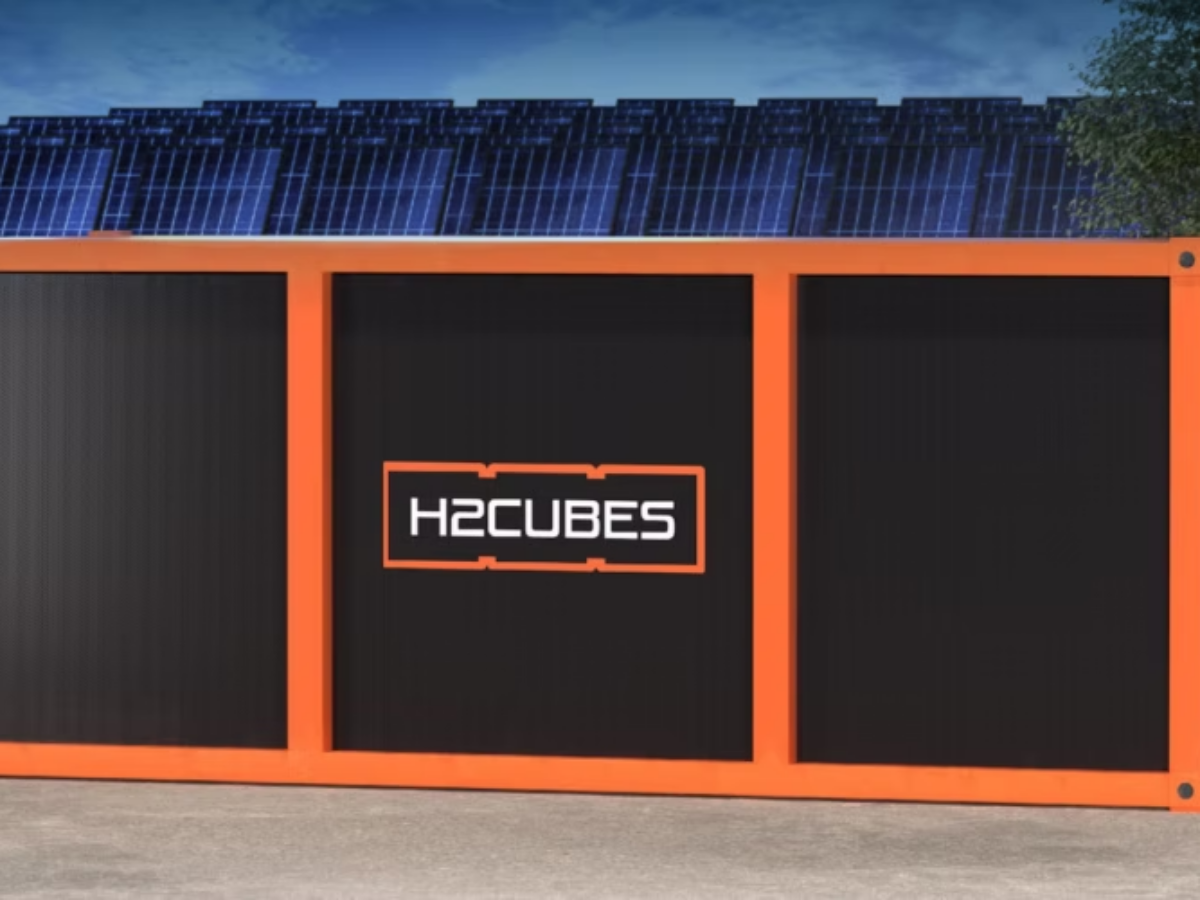
The Gartner Hype Cycle (see below) has gotten a workout during the current generative AI boom.
It can be an interesting framework to superimpose on the progress of any new technology that attracts a surge of interest.
For the green hydrogen industry, SolidHydrogen CEO Philippe Odouard says the peak was probably about two years ago. This year has seen excitement turn to reality in a lot of ways, such as the axing of major projects in South Australia and Queensland.
“And that actually ends up… when you find out that the technologies that are in existence today are not competitive against diesel or fossil fuels in general. A lot of these projects are dropped,” Odouard tells @AuManufacturing.
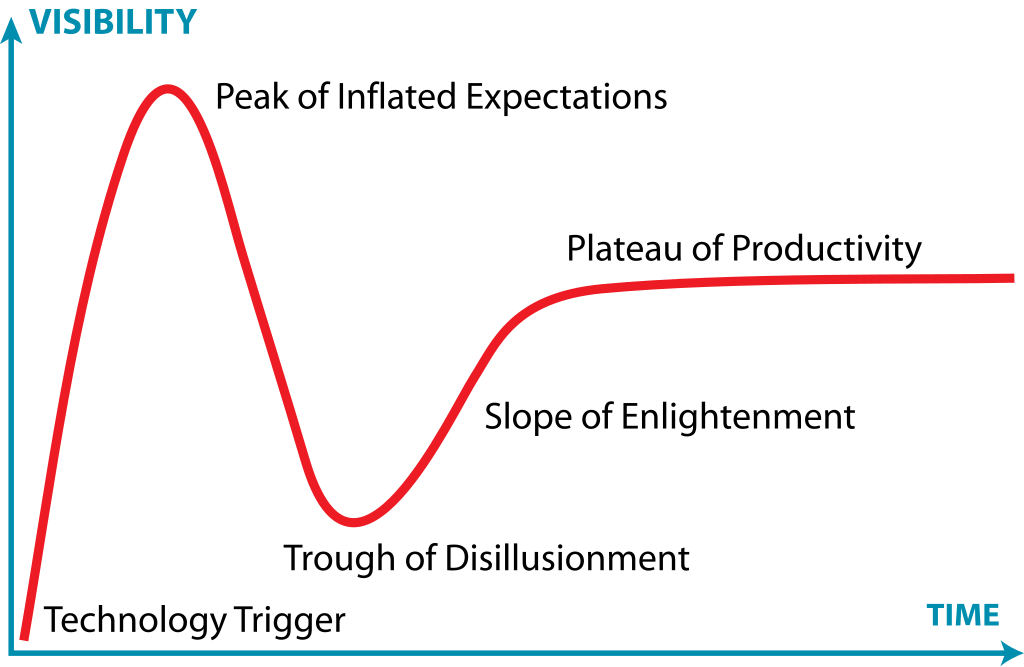
Picture: credit Jeremykemp (CC BY-SA 3.0)
“And if you have invested huge amounts of money without caring about that, simply on the hype, well, you get burned.”
The international market for hydrogen continues overall, with demand by volume up 2 per cent in 2024, according to the International Energy Agency. Low-emissions hydrogen made up just one per cent of nearly 100 million tonnes in total volume.
Aside from anything else, adds Odouard, there are commercially viable applications that exist today, such as tens of thousands of hydrogen-powered forklifts operating in warehouses in the US, and long-time demand from the chemicals industry.
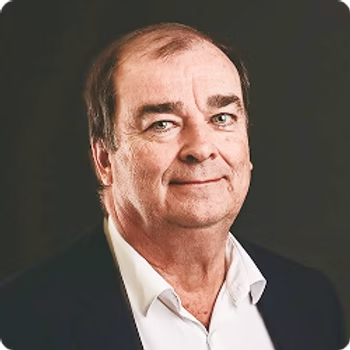
Odouard’s company is his Australian third startup in the last 15 years, following time leading composites technology companies Quickstep and XTEK (now known as HighCom.)
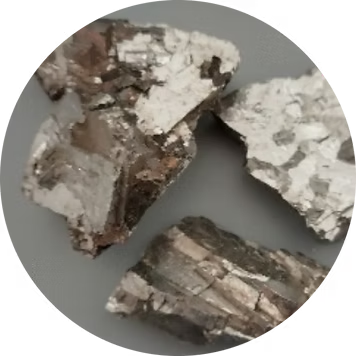
Its focus is not on hydrogen production, but on the purification, compression and storage steps in the hydrogen chain. Their key ingredient is specialised hydrides, which Odouard describes as powders that, at 30 bar, are able to absorb and store three times as much hydrogen compared to storage in gaseous form at 700 bar.
 According to SolidHydrogen, its systems are able to do this and replace three separate types of machinery for the three steps mentioned above, at an overall saving of 84 per cent versus established methods.
A co-founder is Professor Kondo-François Aguey-Zinsou, who leads the MERLin (Materials Energy Research Laboratory in nanoscale) group at University of Sydney’s School of Chemistry.
(Aguey-Zinsou’s hydride research was previously used to establish energy storage company LAVO in 2020. An administrator was appointed to LAVO Group in December 2024 after unsuccessful efforts to raise capital, according to a report by a liquidator in April. LAVO still operates, but manufactures its hydrides and home energy storage systems overseas.)
Odouard says that SolidHydrogen’s technology is at Technology Readiness Level 7, and the company is currently seeking funds to build a pilot plant able to make kilograms per hour of hydrides.
Last month it announced a $2.5 million grant supporting two pilot projects with Singaporean electrolyser company SunGreen and “key regional partners” in French Polynesia and Indonesia.
The focus for applications is stationary energy storage, which is where hydrogen shines, according to Odouard.
“If you want to sort of separate, for instance, batteries against hydrogen, batteries are best at smaller systems: your computer, your watch, your car, little trucks,” he offers.
“But when you get to very big trucks or major industrial applications, batteries [are] not well suited. It's very bulky. It's quite expensive.”
Other emerging methods of hydrogen storage, such as metal-organic frameworks or liquid organic hydrogen carriers, might be better suited to transport applications due to weight reasons.
On projects based on emerging technologies along the hydrogen chain, the most important thing is being price competitive, says Odouard.
“If you want to be successful, that's the only way,” he shares.
“Subsidies are not going to change very much because subsidies by the kilo, like Australia wants to do and a few other countries – if you invest for 15, 20 years, the government is not going to give you the subsidies for 15, 20 years.
“So your thing is shot very quickly.”
In this episode of @AuManufacturing Conversations, Odouard tells us about his experiences running technology startups in Australia, where he sees growth in the hydrogen coming from, the best ways to keep ahead of companies wanting to steal novel IP, and more.
Editor's note: An earlier version of this article incorrectly referred to Odouard as the company's founder.
Episode guide
0:23 – Moved to Australia 40 years ago and spent most of his time since then in industry. The last 15 years have had a focus on startups – Quickstep, Xtek (now known as HighCom), and more recently with SolidHydrogen.
2:07 – What manufacturing startups take and some of the challenges (being Australian isn’t that big of a barrier, according to Odouard.)
3:35 – Differences – there aren’t too many – between heading defence startups and heading SolidHydrogen.
5:02 – A company needs a lot of different skills.
5:42 – Linking up with Professor Kondo-Francois Aguey-Zinsou.
6:29 – An introduction to hydride alloys if one is needed.
7:32 – “It’s not a question of pressure, it’s not a question of temperature, it’s a question of molecular connections.” Useful for “typically 10,000 cycles” or potentially 30 years.
8:30 – A benefit to hydrides is that, used correctly, they can purify, compress and store hydrogen at low costs, according to Odouard.
11:28 – The energy required to melt hydrides isn’t a dealbreaker for doing this here.
11:57 – What the company plans to sell to customers.
13:03 – The approach to defending against copycats, involving continuous R&D with customers, some patents, and trade secrets.
15:25 – Some comparisons with other up-and-coming hydrogen storage technologies including metal organic frameworks (MOFs) and liquid organic hydrogen carriers (LOHCs)
16:40 – Their main market is in stationary applications. Batteries are better for energy storage in transport, but not large-scale stationary energy storage.
18:25 – You have to be price-competitive. Being green is not enough. “Subsidies are not going to change very much, because subsidies by the kilo, like Australia wants to do, and a few other countries: If you invest for 15, 20 years, the government is not going to give you the subsidies for 15 to 20 years. So your thing is shot very quickly.”
19:37 – ESAF.and biofuels.
21:50 – An American project involving eSAF. Potential for that fuel in ships.
23:02 – Funding. How the company has supported itself so far and a planned capital raise to reach the next step: pilot manufacturing.
26:28 – Why Odouard sees a healthy future for hydrogen. “It’s not exactly a dying market… The top of the hype was probably a couple of years ago, the trough is probably now.”
27:45 – Hydrogen is an ideal fuel for off-grid sites like mines.
28:45 – There’s already a solid demand for hydrogen from forklift users. The chemical industry is another eager user.
30:55 – Hydrogen has strong potential in the reduction of iron ore.
32:08 – Australian companies should look to be globally-relevant from the beginning as the demand just doesn’t exist here.
33:02 – The lack of suppliers for manufacturing businesses in Australia and how to handle this issue.
Pictures: supplied
Further reading
SolidHydrogen partners with Korea’s EN2CORE Technology
Pressure and performance: Australian company pushes to be a global leader in armour
Equipping Australia’s armed forces – Xtek switches into higher (more protective) gear
More in this section




@aumanufacturing Sections
Analysis and Commentary Awards Casino reviews Defence Gambling Manufacturing News No deposit Bonus codes Online Casino Podcast Technology Videos