
Aumanufacturing


Researchers’ “breakthrough catalyst” could deliver much more useful zinc air batteries: Monash University
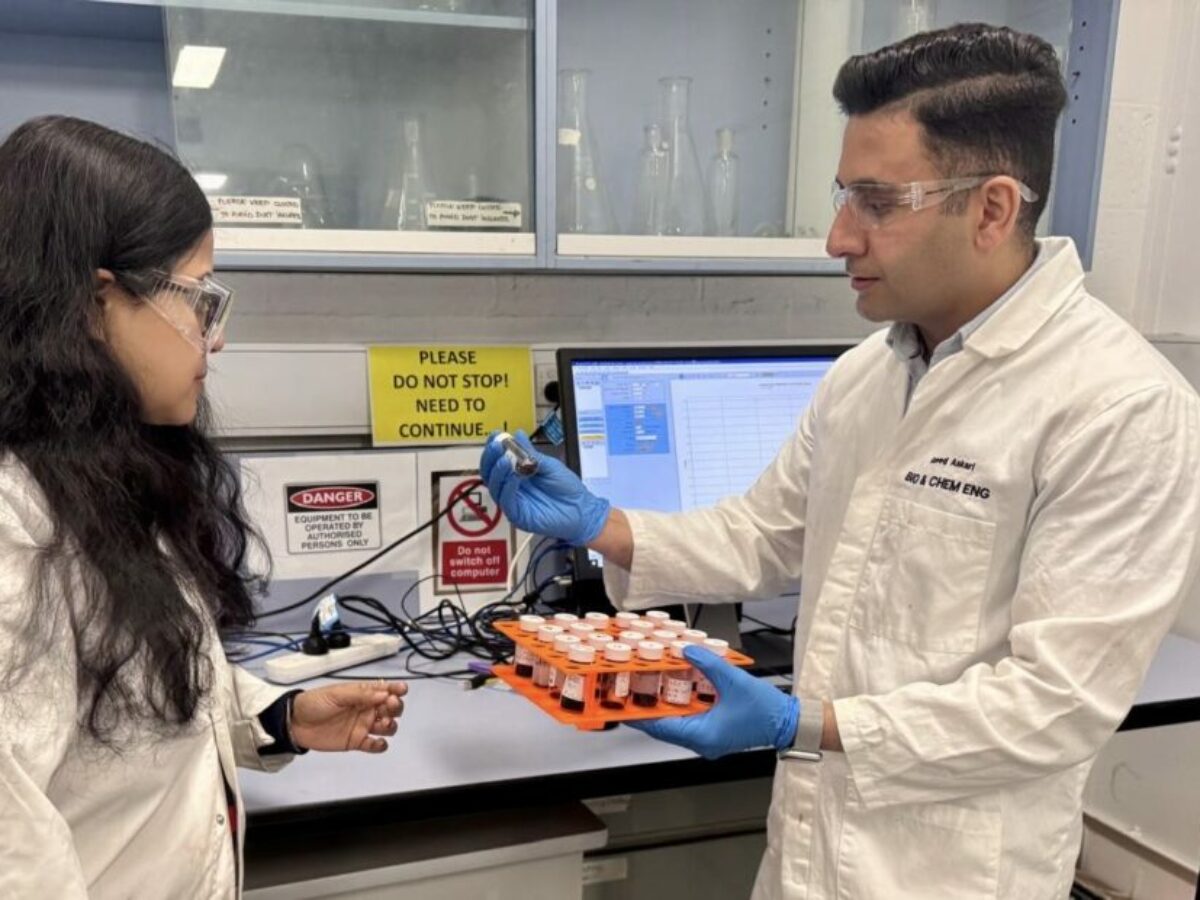
Researchers have developed a new catalyst that Monash University says could bring zinc-air batteries “closer to real-world, grid-scale and transport uses”.
According to a statement from the university on Monday, the catalyst is able to make the batteries oxygen reactions “much faster and more efficient”, and “[offer] more power, longer life and lower costs.”
The invention is detailed in a new paper in Chemical Engineering Journal (linked.)
The release explains that a heat treatment method turned a 3D material “into ultra-thin carbon sheets and added individual cobalt and iron atoms”. This enabled improved performance which went beyond that displayed by “standard commercial catalysts made from expensive metals like platinum and ruthenium”.
“By engineering cobalt and iron as individual atoms on a carbon framework, we achieved record-breaking performance in zinc-air batteries, showing what is possible when catalysts are designed with atomic precision,” said Saeed Askari, lead author on the paper alongside Dr Parama Banerjee.
Askari said: “Our advanced simulations revealed that the cobalt-iron atom pairs, combined with nitrogen dopants, enhance charge transfer and optimise reaction kinetics, solving one of the biggest bottlenecks for rechargeable zinc-air batteries.”
Banerjee added that running a rechargeable zinc-air battery continuously for more than two months “is a milestone for the field” and demonstrated that the technology “is ready to move beyond the laboratory and into practical applications”. He believes that the principles behind this design of the catalysts could be applied to fuel cells, water splitting and carbon dioxide conversion.
Zinc-air batteries have been described as having advantages including high energy storage capacity and affordability versus lithium ion chemistries, though disadvantages in low energy output and sensitivity to conditions such as humidity and temperature. Their uses include in watches and hearing aids.
Picture: supplied
Further reading
Battery Energy to manufacture Gelion batteries in western Sydney
RMIT-led team says their metal-ion “water batteries” are catching up to lead acid, lithium ion

🌍 World
Worldwide Players
Except Australian players

📰 News
Latest Updates
Loading latest news…
More in this section




@aumanufacturing Sections
Analysis and Commentary Awards Casino reviews Defence Gambling Manufacturing News No deposit Bonus codes Online Casino Podcast Technology Videos