
Aumanufacturing


Thin-film composite membranes ready for translation, say RMIT researchers
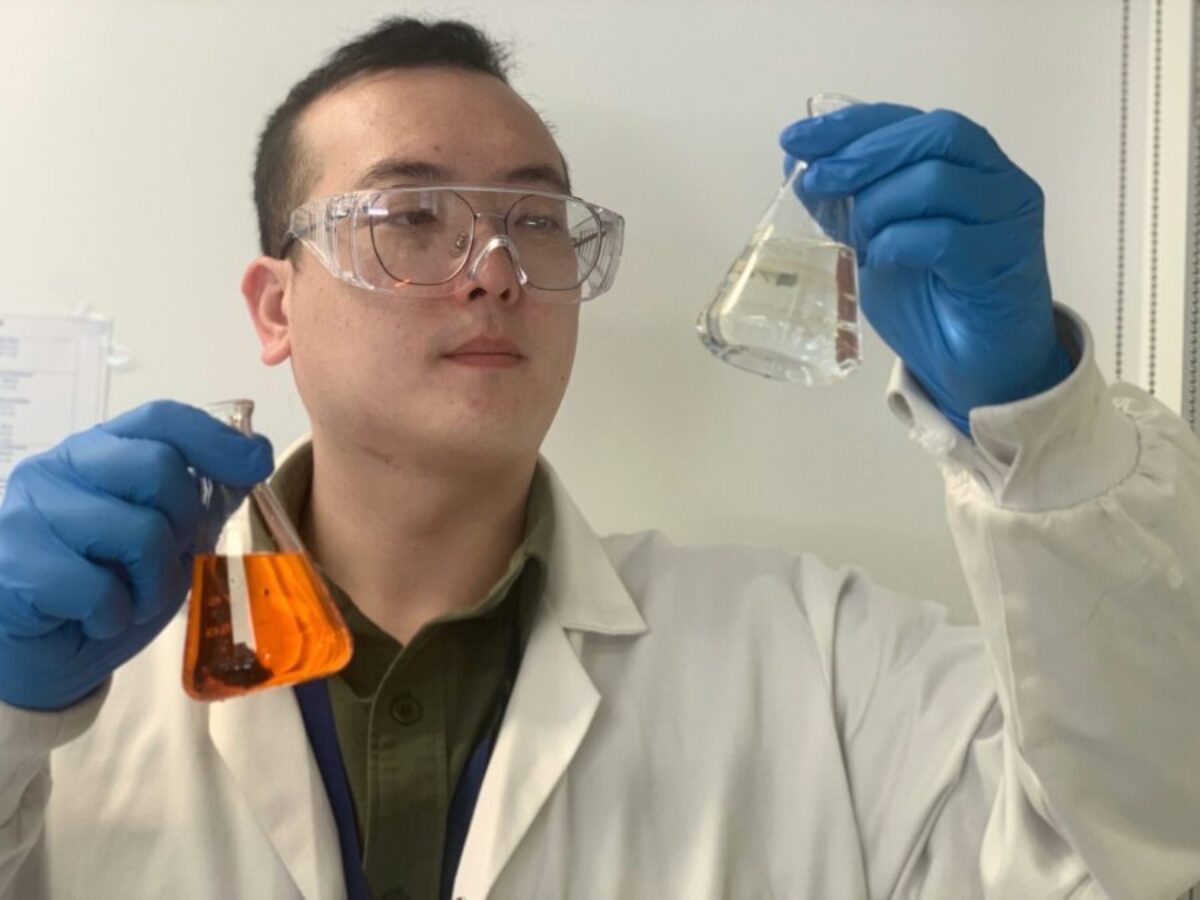
RMIT University researchers have developed what they say are ultra-thin filters with promise for making chemical manufacturing and recycling more energy- and cost-efficient, and are looking to bring their invention into industrial use.
A statement from the university on Thursday describes the filters as combining “super-thin layers of boron nitride” and aramid synthetic fibres, offering flexibility, robustness, and stability “even under high pressure.”
The work is led by Yuxi Ma, a PhD scholar, and Professor Weiwei Lei, an Australian Research Council Future Fellow in Applied Chemistry & Environmental Science at RMIT’s School of Science.
“Boron nitride normally repels water, which makes it hard to combine with other materials,” said Ma (pictured) in a statement.
“We altered its surface so that it attracts water instead. That allowed us to form a stable, even mix with the fibres and create a much stronger composite filter.”
He added that many industrial processes rely on solvents to produce or purify products – with separating out the solvents and re-using slow and energy-intensive – though their filters let solvents pass quickly and hold back larger molecules.
Potential applications given were medicine and dye production.
The filters are described as working effectively at lab-scale with solvents such as ethanol, methanol and acetone, maintaining stability under pressures up to 10 bar and continuing to perform consistently over 24 hours of continuous use.
When the active layer’s thickness was adjusted, the researchers “could control how selective the filter was”. Approximately 1 micrometre giving a happy medium of fast flow and strong blocking performance, filtering out up to 96 per cent of larger dye molecules.
“We’ve shown it’s possible to create an ultra-thin, pressure-resistant filter using materials that are lightweight and easy to handle,” said Lei.
“With further development, we see strong potential for these filters to help industries transition to more sustainable processes.”
A recent paper on the breakthrough in the Journal of Membrane Science can be accessed here.
Further reading
Fibres and composites transforming industry: Composite repair and sustainment
Pfi partners with distiller to test its unique titanium filtration system
Monash scientists develop filter to remove “forever chemicals” from water

🌍 World
Worldwide Players
Except Australian players

📰 News
Latest Updates
Loading latest news…
More in this section




@aumanufacturing Sections
Analysis and Commentary Awards Casino reviews Defence Gambling Manufacturing News No deposit Bonus codes Online Casino Podcast Technology Videos