
Aumanufacturing


UniSQ, Australia Sunlight Group hope to progress mixed plastic-to-graphene recycling tech
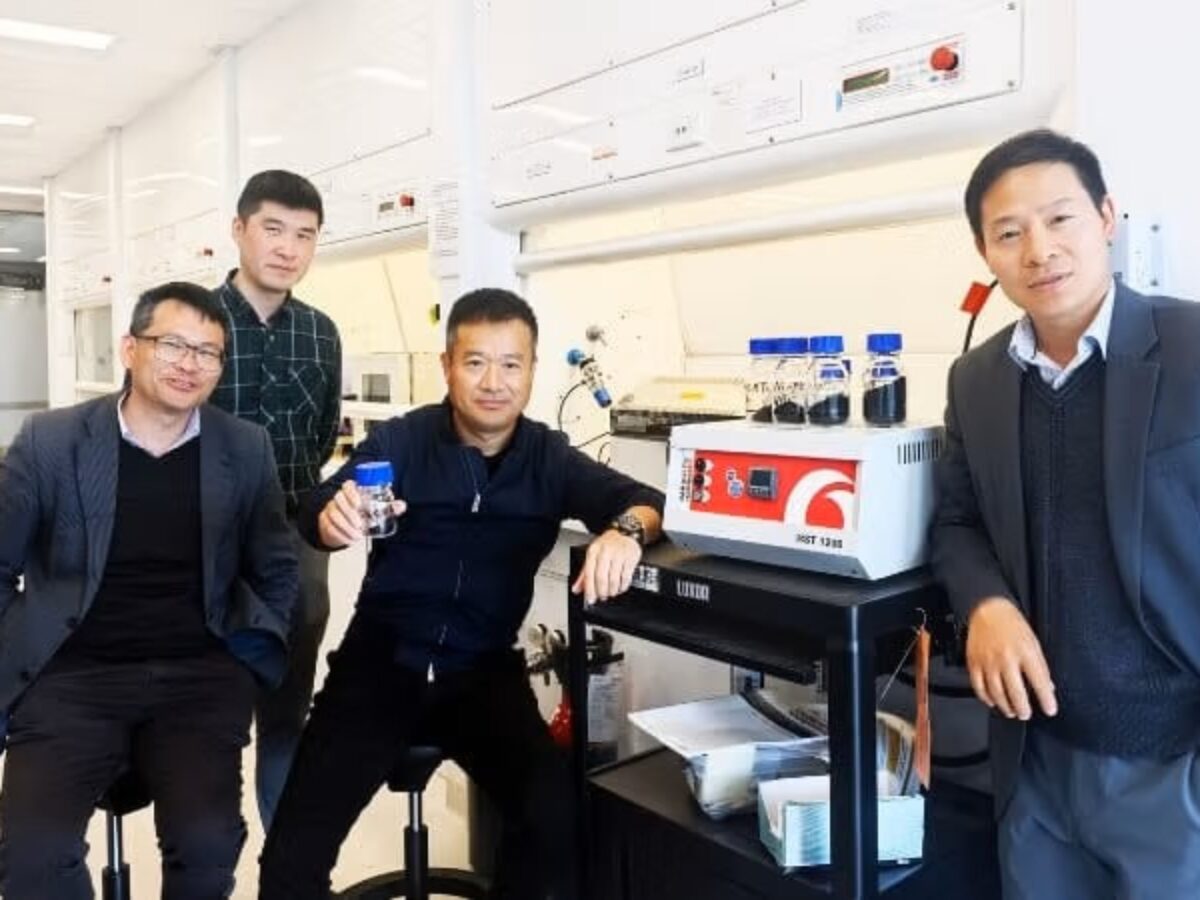
Researchers at the University of Southern Queensland (UniSQ) are looking to further develop a lab-level technology for upcycling mixed plastics into valuable carbon nanomaterials and hydrogen.
According to a statement from UniSQ on Wednesday, the team is working with plastic recycler Australia Sunlight Group (ASG) on the problem, with support from the AU-UK Hydrogen Energy Partnership program, and has successfully made “gram-scale quantities of graphene and separated pilot-scale green hydrogen in the lab.”
(Graphene is a family of atomically-thin carbon materials.)
Researchers Professor Pingan Song and Professor Xuesen Zeng have improved the performance of ASG’s proprietary metal-based catalyst technology, with this now able to process mixed plastics into single-walled carbon nanotubes (SWNT) as well as multi-walled carbon nanotubes (MWCNT.)
Their process also creates green hydrogen, according to the release, and can be “isolated using advanced gas separation technology developed by Dr Aaron Li of the University of Melbourne, another AU-UK program partner.”
The team aims to begin pilot production of SWNT within two years.
Mixed plastic waste is challenging for reasons including the different melting points of different plastic types, contaminants, and difficulties around having to separate plastics.
According to the statement, SWNTs are incredibly strong, with a theoretical tensile strength of 100–200 GPa nearly 100 times stronger than steel, are about six times lighter, boast exceptional thermal and electrical conductivity, and can fetch between $50 and $1,000 per gram, depending on quality.
The university added that the team is seeking investment in their work, with pilot-scale equipment for the catalyst and SWNT production potentially running up to “several million dollars per unit.”
More information is available here.
Picture: credit UniSQ
Further reading
Graphene helps make more hydrogen with less energy
Recycler group raises concerns about lack of plastic processing capacity

🌍 World
Worldwide Players
Except Australian players

📰 News
Latest Updates
Loading latest news…
More in this section




@aumanufacturing Sections
Analysis and Commentary Awards Casino reviews Defence Gambling Manufacturing News No deposit Bonus codes Online Casino Podcast Technology Videos