
Aumanufacturing


Government is backing Australian manufacturing, and that’s a great thing
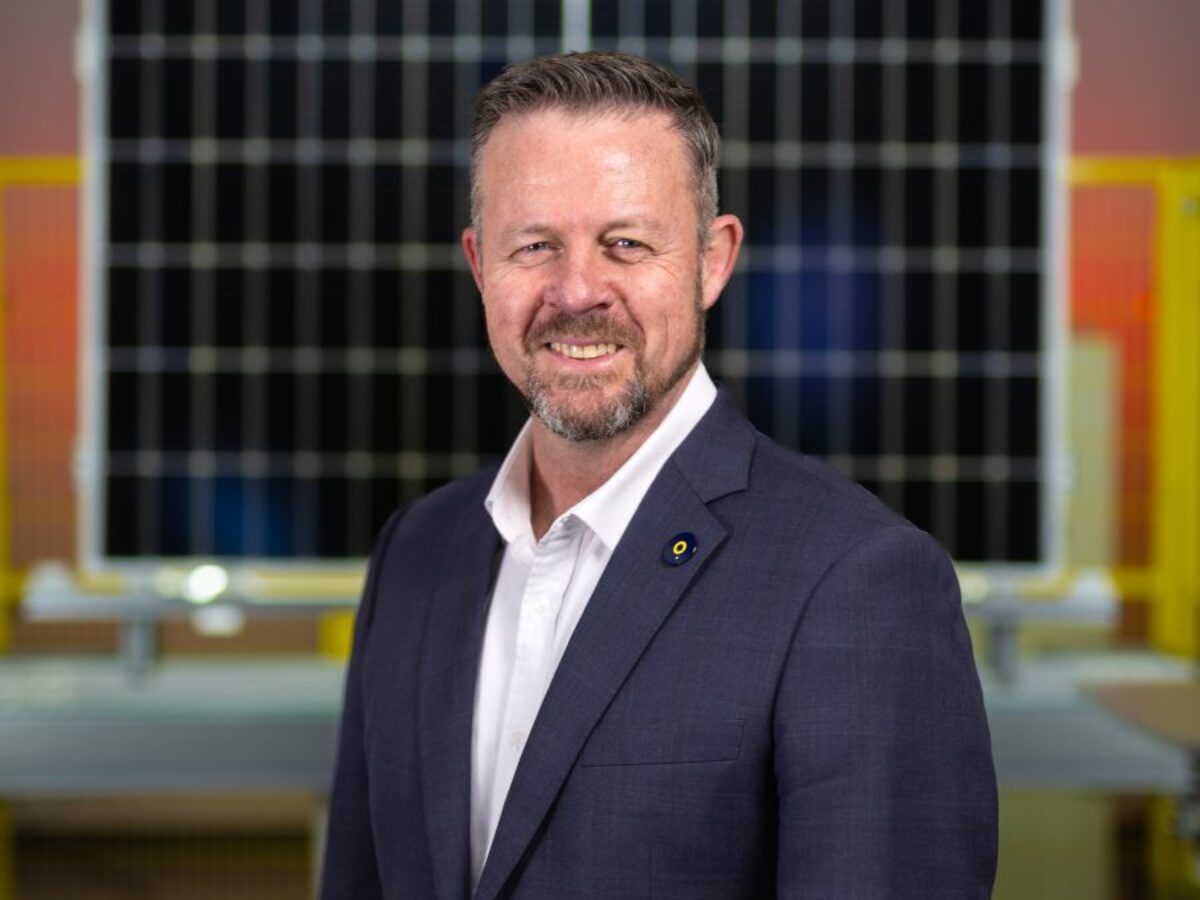
Solar module maker Tindo Solar was recently awarded $34.5 million in federal government support. Here CEO Richard Petterson answers criticism about assistance to local companies in terms of the “potential unfair advantage” enjoyed by other nations selling into Australia.
The big news in renewables last week was the government’s $34.5 million commitment to domestic manufacturing of solar PV panels, at Tindo’s Adelaide factory.
Managed by the Australian Renewable Energy Agency (ARENA), the Solar Sunshot program allows Tindo – Australia’s only solar panel manufacturer – to access a more competitively-priced market without sacrificing our quality. Rather than selling exclusively in the “premium” market, we’ll also be able to compete in the “high middle” segment which may not sound like a big deal but it means an expansion of around four times our current addressable market and allows us to grow with economies of scale.
With the $34.5 million support, we will increase production from 20MW per year to 180MW, we will employ 50 extra people, our cost of goods will reduce appreciably, and our increased volumes will give us a shot at supplying utility-scale projects and pursuing export contracts.
The Sunshot package is exciting for Tindo and for the broader manufacturing sector. Critics of this program suggest Sunshot will fund something that otherwise wouldn’t exist. However, Sunshot’s Manufacturing Production Credit (MPC) does not pay Tindo to keep its doors open. We are already viable, and the doors are open.
Sunshot is an important initiative from government because with an MPC, Australian industry can rebalance a potential unfair advantage imposed by other countries.
Australia committed to trade liberalisation in the 1990s, which saw us become a low-tariff, free trade nation, with an open market to the world’s cheapest goods. The price to pay for this policy has been a manufacturing sector that plummeted from 25 per cent of Australian GDP in the mid-1980s, to around 6 per cent today. Amazingly, manufacturers still employ around 900,000 people and most of us have shifted to advanced manufacturing, which has also meant a focus on high value-add segments where quality and reliability are reflected in higher prices.
Australian manufacturers – Tindo included – have found it hard to compete with foreign governments with their subsidised electricity, artificially low wages and export bounties that pay manufacturers to export products, including solar panels.
It’s not reasonable to ask an Australian manufacturer to compete with the might of a foreign government. But we can use our own government support to reduce the price gap, allowing Australian manufacturers to compete in at least the high-quality segments of this strategic sector.
One of the misconceptions of the debate around Solar Sunshot – and more broadly, Future Made In Australia – is the argument that if Australia can’t compete in the mass market, it should close the factories and leave it to other countries.
But that is a false comparison. Australian manufacturers can, and do, compete in the high value-add, premium markets that are served by advanced manufacturing firms committed to R&D investment. Our company resources an in-house design and engineering function which works collaboratively with external research partners and global supply chain participants. The result is a panel which earned the top rank in the CHOICE solar panel product review of early 2025.
We recently signed a $8.5 million export deal with Vietnam where the growing demand is for a solar panel that will perform to the power rating on the panel’s label and do so with high levels of reliability, in all climates. We utilise high-quality materials and a Zero-Defect manufacturing process so condensation doesn’t develop under the glass – a crucial feature in humid markets such as Southeast Asia and Northern Australia.
From our perspective, removing emissions from our energy system will be efficiently achieved if the hardware is reliable and high performing, allowing the panel to offset its own embedded carbon. And quite aside from the environmental consideration, Australia expects to have around half of the generation capacity in the National Energy Market in 2050, coming from solar. Energy is a strategic part of the national economy, and we need to build an industrial base that can supply, maintain and replace this future energy system with the most durable and high-performing panels.
Tindo started making panels in 2011 and we opened our new, current factory in 2021. With this Solar Sunshot support we can grow to a new scale during the seven years of the program and the Sunshot support will also fund a feasibility study for a “Gigafactory”, capable of producing 1GW of Australian solar panels per year. The Gigafactory will create 230 jobs directly, and more than twice that in the domestic supply chains that support it.
The government has committed to a role for Australian manufacturing in our future energy supply, and we are proud to take up that challenge.
Picture: credit Tindo Solar
Richard Petterson is the Chief Executive Officer of Tindo
Further reading
Tindo Solar awarded $34.5 million through Solar Sunshot Program
Tindo Solar to provide 52,174 panels for Bowen Water Pipeline project
Tindo Solar exports panels to Vietnam
Tindo Solar plans $100m solar PV panel gigafactory
Tindo Solar inaugurates new solar PV factory with new Karra panel

🌍 World
Worldwide Players
Except Australian players

📰 News
Latest Updates
Loading latest news…
More in this section




@aumanufacturing Sections
Analysis and Commentary Awards Casino reviews Defence Gambling Manufacturing News No deposit Bonus codes Online Casino Podcast Technology Videos