
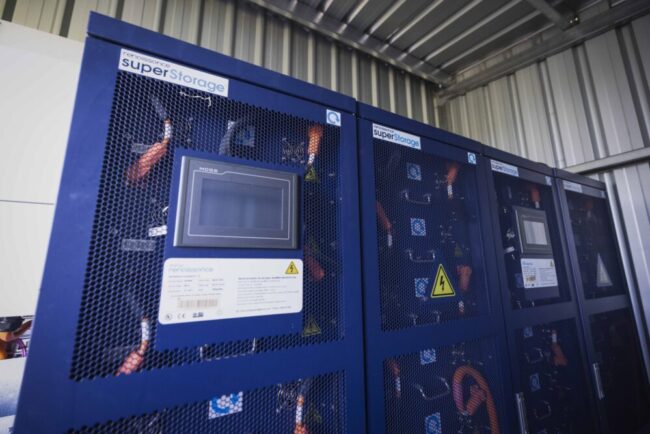
Energy Renaissance, Australia’s first lithium battery manufacturer, goes into administration

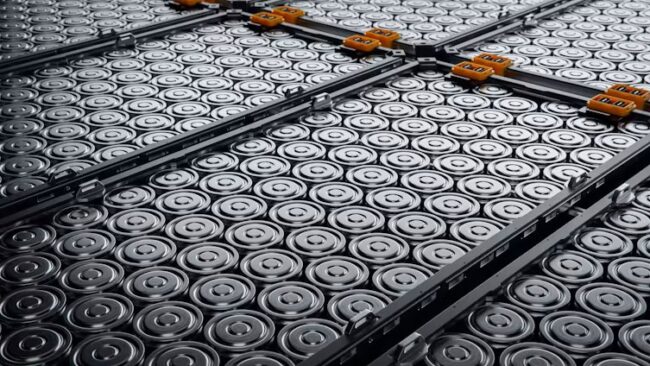
Lithium ion battery storage company Energy Renaissance, which recently marked a decade anniversary, has apparently collapsed. Few details are available, but an ASIC notice dated August 13 states that Stewart William Free and Bradd William Morelli have been appointed as administrators to ER Industrial Pty Ltd, formerly trading as Energy Renaissance. @AuManufacturing requested comment from…

How EVs and electric water heaters are turning cities into giant batteries

Bin Lu, Australian National University and Marnie Shaw, Australian National University As the electrification of transport and heating accelerates, many worry the increased demand could overload national power grids. In Australia, electricity consumption is expected to double by 2050. If everyone charges their car and heats water using electric systems at the same time, peak…

Methane-to-turquoise hydrogen catalyst project awarded $492,526 grant from AEA

A team including energy technology company 1414 Degrees has been awarded an Australia’s Economic Accelerator (AEA) Ignite grant of $492,526 for a project progressing a proprietary hydrogen reactor. According to a statement to the ASX-listed company on Tuesday, the grant is for catalyst development concerning its SiPHyR (Storage integrated Pyrolytic Hydrogen Reactor) technology, and involves…

Monash claims research could see compact rooftop flow batteries on the market “in a few years’ time”

A new water-based battery developed by Monash University research engineers could one day help households “store rooftop solar energy more safely, cheaply and efficiently”, according to the university. The new battery makes use of a “new membrane design [which] fixes the speed problem” normally attached to flow batteries, and which normally limits their use to…

Droplet discovery: Water creates 10 times more electrical charge than scientists thought

Speaking on the @AuManufacturing Conversations podcast recently, Dr Joe Berry from the University of Melbourne and Dr Peter Sherrell from RMIT explained how they observed that when a water droplet becomes stuck on a tiny bump or rough spot, the force builds up until it “jumps or slips” past the obstacle, creating an irreversible electrical charge that had not been reported before.

Used EV batteries could power vehicles, houses or even towns – if their manufacturers share vital data

By Daryoush Habibi, Edith Cowan University and Yasir Arafat, Edith Cowan University Around the world, more and more electric vehicles are hitting the road. Last year, more than 17 million battery-electric and hybrid vehicles were sold. Early forecasts suggest this year’s figure might reach 20 million. Nearly 20% of all cars sold today are electric.…

ARENA grant fuels investor interest in Livium’s LFP battery technology

Livium’s wholly owned subsidiary VSPC has reported increased investor engagement following its recent A$30 million grant from the Australian Renewable Energy Agency (ARENA) for an LFP Demonstration Plant. The company announced on Tuesday that it is actively seeking to close the remaining A$30 million funding gap for the 250-tonne per annum demonstration facility, which will…

Why build nuclear power in place of old coal, when you could have pumped hydropower instead

By Timothy Weber, Australian National University and Andrew Blakers, Australian National University Australia’s energy policy would take a sharp turn if the Coalition wins the upcoming federal election. A Dutton government would seek to build seven nuclear power plants at the sites of old coal-fired power stations. The Coalition says its plan makes smart use…