
Aumanufacturing


Scientists from Monash milk microbes for tunable bioplastic blends
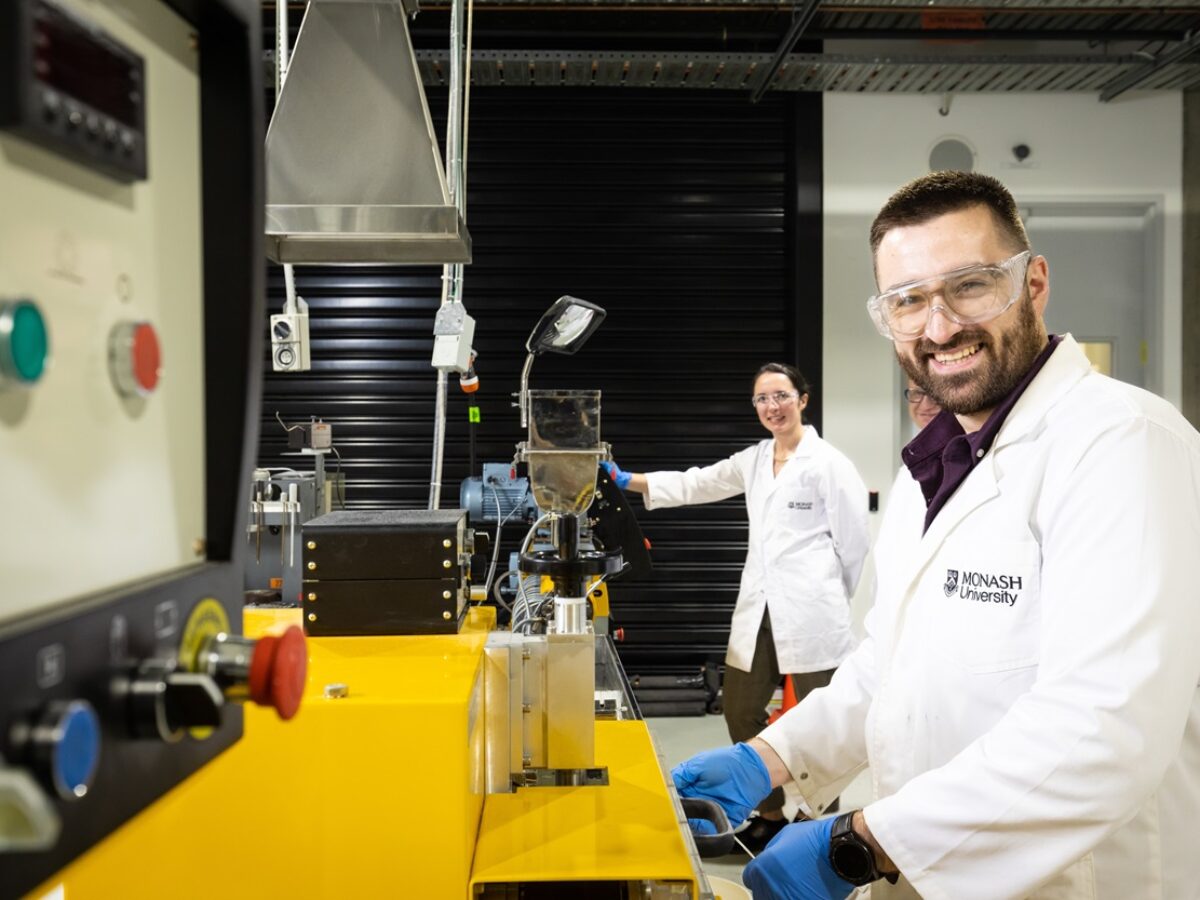
Researchers at Monash University have demonstrated a way to manufacture bioplastic films with customisable properties, using natural polymers produced by soil-dwelling microbes.
According to a statement from the university on Friday, researchers were able to produce films out of the bioplastic PHA “that behave like conventional plastics and can be molded into other shapes or solids”, by selecting different bacterial strains and blending their biopolymers.
PHAs are a family of polyesters with acknowledged potential as green plastics, with properties similar to petrochemical-based plastics, though they are also biodegradable, compostable, and biocompatible.
Led by Edward Attenborough and Dr Leonie van‘t Hag (both pictured), the research published in Microbial Cell Factories (linked) saw the bacteria (Cupriavidus necator and Pseudomonas putida) fed a selected “diet” of sugars with the right blend of salts, nutrients and trace elements.
The microbes began stockpiling natural plastic inside their cells, before these were “milked” by the scientists using solvents and made into ultrathin films about 20 microns thick. The films were then tested for stretchiness, strength and melting behaviour.
“This research demonstrates how food waste can be transformed into sustainable, compostable ultrathin films with tunable properties. The versatility of PHAs means we can reimagine materials we rely on every day without the environmental cost of conventional plastics,” said Attenborough.
“By tailoring these natural plastics for different uses, we’re opening the door to sustainable alternatives in packaging, especially where they can be composted along with food or agricultural waste.”
The release adds that by comparing a stiff plastic made by C. necator with a softer, more flexible version from P. putida, the study demonstrates how blending the two can tune film properties like crystallinity and melting point, while maintaining strength and flexibility.
The team is collaborating with industry partners including Enzide and Great Wrap through the ARC RECARB and VAP hubs on biodegradable packaging and medical solutions with potential commercial applications.
Picture: supplied
Further reading
Bioplastics uses confused by lack of labelling – CSIRO
CSIRO, Murdoch University launch $8 million bioplastics hub
Bioplastics uses confused by lack of labelling – CSIRO

🌍 World
Worldwide Players
Except Australian players

📰 News
Latest Updates
Loading latest news…
More in this section




@aumanufacturing Sections
Analysis and Commentary Awards Casino reviews Defence Gambling Manufacturing News No deposit Bonus codes Online Casino Podcast Technology Videos